News
A2025-12-17
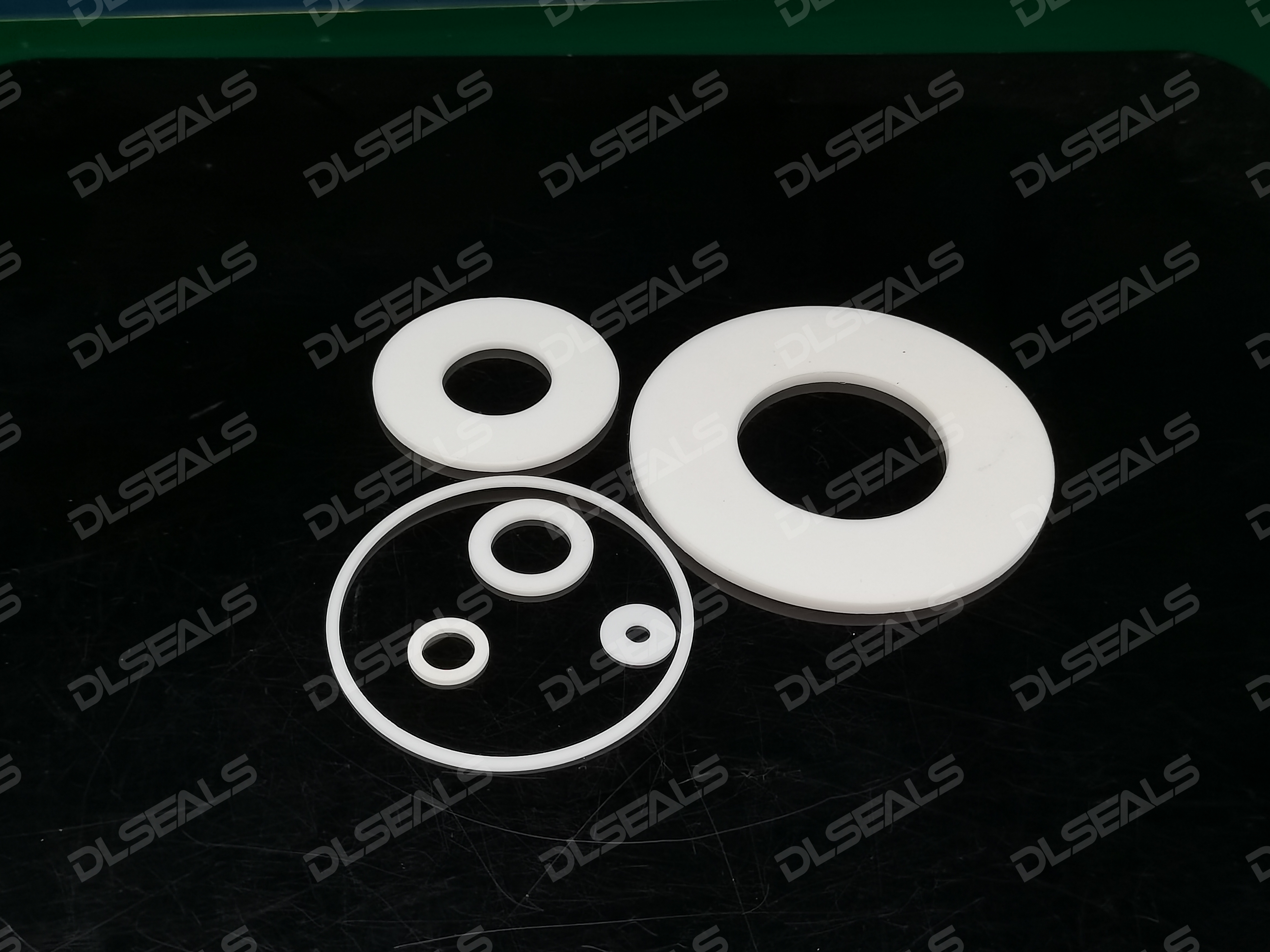
PTFE seals, renowned for their exceptional corrosion resistance, high/low-temperature tolerance, and low friction coefficient, have become indispensable components in modern industry. This article provides a comprehensive analysis of the complete production process, from PTFE raw material to final inspection and shipping, showcasing the precision manufacturing behind this high-performance product.
1. Raw Material Preparation and Pre-treatment
Production begins with high-quality polytetrafluoroethylene (PTFE) resin powder. This fine white powder undergoes strict incoming inspection, including particle size analysis, molecular weight determination, and impurity testing. High-quality PTFE resin should have appropriate particle size and uniform molecular weight distribution, which forms the basis for the final product's physical properties.
The pre-treatment stage involves precise weighing and pre-mixing. Pure PTFE has disadvantages like poor wear resistance, susceptibility to cold flow, and low thermal conductivity. Therefore, based on the final operational requirements (e.g., wear resistance, pressure resistance, thermal conductivity), specific filler materials are added for modification. The following table shows common filler materials and their corresponding performance improvements:
|
Filler Material |
Main Performance Improvements |
Typical Application Scenarios |
|---|---|---|
|
Glass Fiber |
Wear resistance, hardness, compressive strength, dimensional stability |
General mechanical seals, applications requiring general pressure and wear resistance |
|
Graphite |
Self-lubrication, thermal conductivity, heat resistance, reduced friction coefficient |
High-speed rotary seals, situations requiring rapid dissipation of frictional heat |
|
Bronze Powder |
Thermal conductivity, wear resistance, hardness, creep resistance (anti-cold flow) |
Heavy machinery, bearing seals, applications requiring good heat conduction and pressure bearing |
|
Molybdenum Disulfide |
Self-lubrication, reduced friction coefficient, wear resistance |
Dry friction or low-speed, heavy-duty sealing applications |
|
Carbon Fiber |
Wear resistance, strength, thermal conductivity, creep resistance |
High-performance seals for harsh operating conditions |
|
Poly(p-hydroxybenzoate) |
Wear resistance, chemical resistance, dimensional stability |
Chemical pump/valve seals, balancing corrosion and wear resistance |
The mixing process must be conducted in a controlled temperature and humidity environment to ensure uniform dispersion of fillers within the PTFE matrix, a crucial prerequisite for achieving consistent material properties.
2. Mixing and Pre-forming
Mixing is a critical step in PTFE seal manufacturing. Modern production lines use precision mixing equipment to ensure uniform distribution of PTFE powder and additives. The mixed material needs to settle and mature, allowing the additives to fully permeate the PTFE particles.
During pre-forming, the mixed material is loaded into a mold and pressed at room temperature under 20-50 MPa pressure to form a "preform." This step determines the product's preliminary shape and density distribution. Pressure magnitude, application speed, and dwell time must be precisely controlled to prevent cracks or uneven density in the preform.
3. Sintering Process: From "Green" to "Sintered" Form
Sintering is the most critical core process in PTFE seal manufacturing, the key transition where PTFE transforms from a powdery state into a dense structure. Sintering is typically performed in a dedicated sintering furnace, divided into three stages:
Low-Temperature Stage (Room temp to 300°C): Slow heating to remove moisture and volatile substances.
High-Temperature Sintering Stage (375-385°C): PTFE crystals completely melt, particle boundaries disappear, forming a continuous structure.
Cooling Stage: Controlled cooling rate ensures appropriate crystallinity and avoids internal stress generation.
The entire sintering process requires precise control of heating rate, peak temperature, and dwell time. Excessive heating speed can cause product cracking, while too slow reduces efficiency. Cooling speed is equally important, directly affecting the product's crystallinity and dimensional stability.
4. Machining and Finishing
The sintered part requires precision machining to become the final product. PTFE's low hardness, high elasticity, and tendency to deform make machining challenging, necessitating specialized equipment and processes:
Turning: Using sharp diamond tools on precision lathes to machine sealing surfaces, suitable for V-rings, piston rings, etc.
Cutting/Blanking: Punching or cutting sheets/rods to produce simple shapes like gaskets and washers.
Molding: Secondary molding for complex-shaped products.
Surface Finishing: Improving surface smoothness and reducing friction coefficient through grinding and polishing.
Cutting parameters must be strictly controlled to prevent deformation from frictional heat. Cleanliness of the machining environment is also crucial for product quality.
5. Post-Processing, Quality Inspection, and Shipping
This final stage ensures the product meets end-use requirements. Key processes and workflow include:
Post-Processing & Special Modification: Includes surface modification (e.g., sodium-naphthalene etching or plasma treatment to improve adhesion) or dimensional stabilization treatment (heat treatment to relieve stress) for some products.
Comprehensive Quality Inspection: The core of quality control. Specialized equipment checks dimensional accuracy (CMM), physical properties (tensile, compression tests), sealing performance (leak rate under simulated conditions), and chemical resistance. Modern production widely uses Statistical Process Control (SPC).
Cleaning, Packaging & Shipping: Final cleaning in a clean environment to remove particles. Products are then packaged with anti-dust/anti-shock materials as per customer requirements, accompanied by complete quality documentation (material certs, COC) ensuring full traceability before shipment.
Conclusion
The manufacture of PTFE seals is a comprehensive technology integrating materials science, precision machining, and quality control. Transforming PTFE raw material into a high-performance sealed product requires precise control across dozens of steps and rigorous quality checks. As industrial technology advances, PTFE seal production processes continue to innovate, moving towards higher precision, better performance, and greater environmental friendliness, providing reliable sealing solutions for high-end sectors like aerospace, chemicals, semiconductors, and healthcare.
This complete process reflects the sophistication of modern manufacturing and the immense value of applied materials science. Behind every high-quality PTFE seal lies a deep understanding of scientific principles and the relentless pursuit of perfecting process details.
[DLSEALS kindly Reminder] Sealing issues? Turn to DLSEALS! As a sealing component manufacturer, we specialize in customizing sealing components, providing a full range of services from design, research and development, production, testing, and more. If you have more information you'd like to know, feel free to contact us directly. DLSEALS's product experts are dedicated to serving you!

GUANGDONG DLSEALS TECHNOLOGY CO.,LTD.
TEL/Whatsapp
:+86 15918359971ADDRESS
:No. 2 Niujiaokeng Road, Baizhoubian, Dongcheng District, Dongguan, Guangdong, China.