News
A2026-11-02
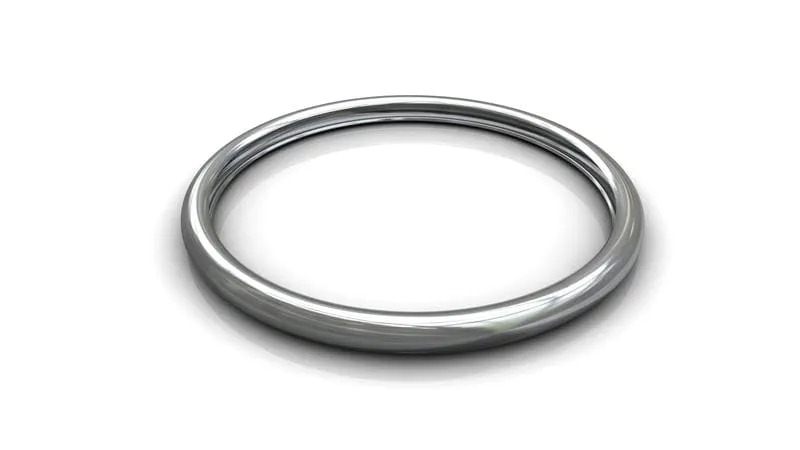
Helium sealing applications place particularly high demands on sealing performance. Helium has extremely small molecules and high permeability, allowing it to pass through microscopic defects at sealing interfaces and even permeate through certain elastomeric materials. Therefore, selecting a sealing ring for helium service requires more than simply considering conventional gas-sealing performance.
For this application, the specified operating conditions are:
Working medium: Helium
Charging pressure: 36 ± 2 bar
Operating temperature: -40°C to +80°C
Seal inner diameter: Approximately 12.00 mm
Maximum allowable helium leakage rate: The specified value is incomplete and must be confirmed, including its exponent and unit.
The main technical challenges include helium permeation, microscopic leakage paths at the sealing interface, low-temperature elastic recovery, and long-term sealing stability under pressure and temperature variations.
It is important to distinguish between two leakage mechanisms: gas permeation through the sealing material and leakage through the interface between the sealing ring and the mating surfaces. Both can contribute to the measured helium leak rate, but they require different approaches to control.
Material selection is one of the most important factors affecting helium sealing performance. Different elastomers vary considerably in gas permeability, low-temperature flexibility, compression set, and chemical resistance.
Low-temperature FKM (Fluoroelastomer) can be considered as a candidate because of its good chemical resistance and relatively low gas permeability compared with many general-purpose elastomers. However, conventional FKM compounds do not necessarily maintain sufficient elasticity at -40°C. A specially formulated low-temperature grade should be evaluated, with particular attention to its actual low-temperature recovery performance.
FFKM (Perfluoroelastomer) offers excellent chemical resistance and broad temperature capability. However, it should not automatically be assumed to have a lower helium permeability than FKM. Its suitability must be assessed using the properties of the specific compound and actual leak-test results.
HNBR (Hydrogenated Nitrile Butadiene Rubber) provides good mechanical strength, wear resistance, and compression performance. Certain formulations may be suitable for gas-sealing applications, but their helium permeability and low-temperature performance need to be verified.
IIR (Butyl Rubber) is known for its relatively good gas-barrier properties and may be worth evaluating where reducing gas permeation is a priority. Nevertheless, its mechanical properties, low-temperature behavior, and compatibility with the actual operating conditions must also be considered.
PTFE (Polytetrafluoroethylene) has very low gas permeability and excellent chemical resistance. However, it lacks the elastic recovery required of a conventional elastomeric O-ring and may be subject to creep under sustained compression. For this reason, PTFE is generally more suitable for specially designed sealing structures, such as spring-energized seals or PTFE-elastomer composite seals, rather than being used as a direct replacement for a conventional O-ring.
Material selection should not rely solely on the generic material designation. The specific compound formulation, hardness, compression set, low-temperature recovery, and helium permeability all need to be evaluated. Ultimately, the material should be validated through helium leak testing under representative operating conditions.
Even when a suitable material is selected, an inappropriate sealing structure can still result in leakage.
For a static O-ring application, the sealing effect is primarily achieved through controlled compression of the ring within its groove. The resulting contact pressure forms a sealing barrier between the ring and the mating surfaces. Under internal pressure, the O-ring is also pushed toward the low-pressure side of the groove, increasing contact with the sealing surface.
Several design factors require particular attention:
Compression ratio: Insufficient compression may result in inadequate contact pressure and leakage. Excessive compression can accelerate material aging, increase compression set, and reduce service life.
Groove dimensions: Groove width and depth must be designed according to the O-ring cross-section, material hardness, and operating pressure.
Extrusion clearance: At a pressure of approximately 36 bar, the clearance between mating components must be controlled to prevent the sealing ring from extruding into the gap.
Surface finish: Scratches, machining marks, and surface defects can form microscopic leakage paths. The sealing surfaces should have a suitable finish and be free from defects.
Installation conditions: Twisting, stretching, cutting, or scratching the sealing ring during installation can compromise its sealing performance.
The specified inner diameter of approximately 12.00 mm is not sufficient to determine the final O-ring dimensions. The cross-sectional diameter, groove geometry, and installation arrangement must also be established.
In addition, it is necessary to confirm whether the ring is used for static axial sealing, static radial sealing, or dynamic sealing. These configurations require different structural considerations.
Helium leak testing is essential for evaluating the actual sealing performance of the assembly. Conventional air-pressure or water-pressure tests may not be sufficiently sensitive to identify the extremely small leakage rates required in helium applications.
A recommended verification process includes:
Material screening: Compare candidate compounds for helium permeability, low-temperature elasticity, compression set, and mechanical stability.
Prototype evaluation: Manufacture sealing rings using the selected material and dimensions, then install them in representative sealing grooves.
Initial helium leak test: Conduct a helium mass spectrometer leak test at room temperature to establish the initial leakage performance.
Temperature verification: Evaluate sealing performance at -40°C, room temperature, and +80°C.
Pressure and temperature cycling: Perform repeated pressure and temperature cycles to assess the stability of the sealing structure.
Final leakage verification: Conduct a helium leak test under the specified operating conditions and compare the results with the allowable leakage limit.
The test method, stabilization time, pressure conditions, and measurement sensitivity should be clearly defined. The acceptance criterion must also specify the complete leakage-rate value and its unit.
For a helium sealing ring with an inner diameter of approximately 12.00 mm, a charging pressure of 36 ± 2 bar, and an operating temperature range of -40°C to +80°C, the final material and structural design cannot be determined from the available information alone.
The following details are particularly important:
Complete allowable helium leak rate: The currently provided value, “6.0X10…”, is incomplete. The full exponent and unit must be confirmed, for example, mbar·L/s, Pa·m³/s, or atm·cc/s.
O-ring cross-sectional diameter: The inner diameter alone is insufficient to determine the sealing dimensions.
Sealing configuration: Confirm whether the application is static axial, static radial, or dynamic.
Pressure definition: Confirm whether 36 ± 2 bar refers to gauge pressure or absolute pressure.
Groove and assembly dimensions: Groove depth, groove width, mating clearance, and sealing-surface geometry are required for structural verification.
Helium sealing requires careful coordination of material properties, sealing geometry, manufacturing quality, and leak-test procedures. Because helium can permeate through elastomers and escape through extremely small interface defects, a material that performs well in conventional gas-sealing applications does not necessarily meet stringent helium leak-rate requirements.
For this application, the most reliable approach is to select candidate materials based on their actual helium permeability and low-temperature elastic recovery, optimize the sealing groove and compression conditions, and verify the complete assembly through helium mass spectrometer leak testing.
The final sealing solution should be determined by the specified allowable leakage rate and validated under the actual pressure and temperature conditions, rather than by material selection alone.
[DLSEALS kindly Reminder] Sealing issues? Turn to DLSEALS! As a sealing component manufacturer, we specialize in customizing sealing components, providing a full range of services from design, research and development, production, testing, and more. If you have more information you'd like to know, feel free to contact us directly. DLSEALS's product experts are dedicated to serving you!

GUANGDONG DLSEALS TECHNOLOGY CO.,LTD.
TEL/Whatsapp
:+86 15918359971ADDRESS
:No. 2 Niujiaokeng Road, Baizhoubian, Dongcheng District, Dongguan, Guangdong, China.