News
A2026-10-21
Hollow metal O-rings are metallic sealing components that achieve sealing through elastic deformation of the metal tube wall, contact stress, and microscopic conformity between sealing surfaces.
Their sealing principle is similar to that of conventional rubber O-rings, but there is one fundamental difference: rubber O-rings rely on the elastic deformation of elastomeric materials, whereas hollow metal O-rings primarily rely on the controlled deformation of a thin-walled metal tube to generate sufficient sealing contact pressure.
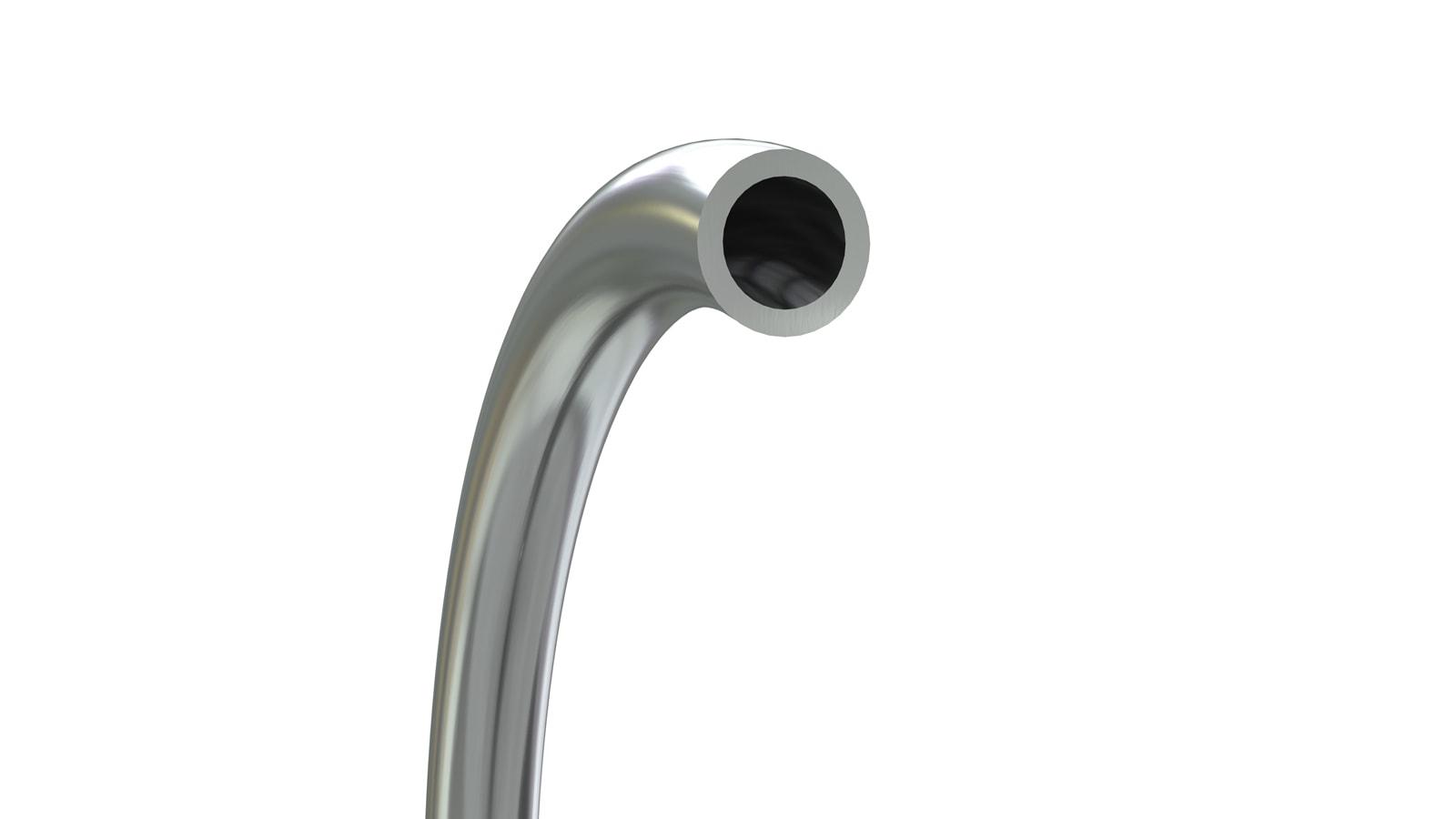
Hollow metal O-rings are typically manufactured by bending thin-walled metal tubing into a circular shape and welding the ends together to form a closed ring. Common materials include stainless steel and nickel-based alloys.
The key structural parameters include:
Ring Diameter (D): Determines the overall ring size and its compatibility with the sealing groove.
Tube Cross-Section Outer Diameter (d): Determines the initial cross-sectional height of the seal.
Tube Wall Thickness (t): Directly affects compression stiffness, elastic recovery, and the required installation load.
Internal Cavity: Reduces the overall stiffness, allowing the metallic cross-section to deform under a controlled compressive load.
Some hollow metal O-rings are also coated with softer metals, such as silver, nickel, or copper, to improve microscopic conformity with the mating surfaces.
When a hollow metal O-ring is installed in a sealing groove, tightening the flange or cover applies an axial compressive load to the seal.
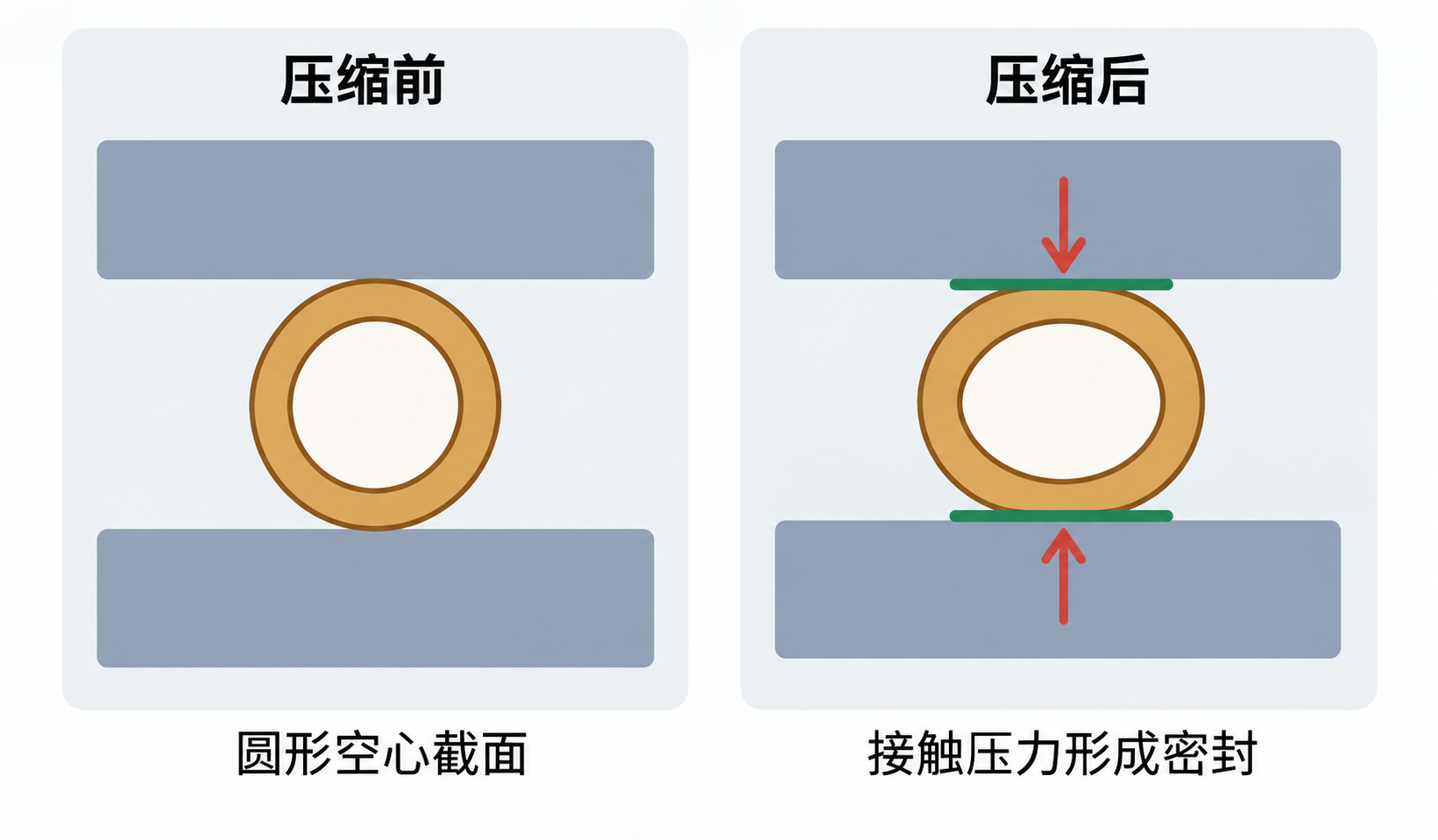
Due to the elastic characteristics of the hollow metal tube, its initially circular cross-section deforms under compression, forming two primary contact regions:
Upper contact region: Between the O-ring and the flange or cover.
Lower contact region: Between the O-ring and the groove bottom.
As compression increases, the contact regions develop normal reaction forces and localized contact stresses.
An initial seal is established when the contact pressure and surface conformity are sufficient to restrict microscopic leakage paths between the mating surfaces.
During operation, temperature changes, pressure fluctuations, and structural deformation may cause small variations in the sealing gap.
The hollow metal O-ring relies on its remaining elastic recovery to maintain contact pressure against the mating surfaces.
However, the elastic recovery of a hollow metal O-ring is generally much smaller than that of a rubber O-ring. Excessive compression may cause significant plastic deformation of the tube wall, reducing its ability to recover and maintain sealing pressure.
Metal sealing surfaces are not perfectly smooth at the microscopic level. Even precision-machined surfaces contain small peaks, valleys, and machining marks.
When a relatively soft metallic coating, such as silver or copper, is applied, the coating can undergo localized plastic deformation under contact pressure. This helps fill microscopic irregularities and reduces potential leakage paths.
Therefore, the sealing performance of hollow metal O-rings depends not only on compression but also on surface roughness, flatness, coating properties, and contact conditions.
This is a common misconception.
Hollow metal O-rings can generally be classified into three types according to their operating mechanisms.
|
Type |
Sealing Principle |
Main Characteristics |
|---|---|---|
|
Plain Hollow Metal O-Ring |
Compression of the metal tube wall generates contact pressure |
Relies primarily on mechanical preload |
|
Gas-Filled Metal O-Ring |
Mechanical preload combined with internal gas pressure |
Can improve contact loading under certain high-temperature conditions |
|
Pressure-Energized Metal O-Ring |
Process pressure enters the internal cavity and increases contact loading |
Sealing force can increase with operating pressure |
A conventional hollow metal O-ring does not primarily rely on internal gas pressure to achieve sealing. Its initial sealing force comes from mechanical compression during installation.
Pressure-energized designs typically require specially engineered openings or passages that allow process pressure to enter the internal cavity. Therefore, not all hollow metal O-rings should be considered self-energizing seals.
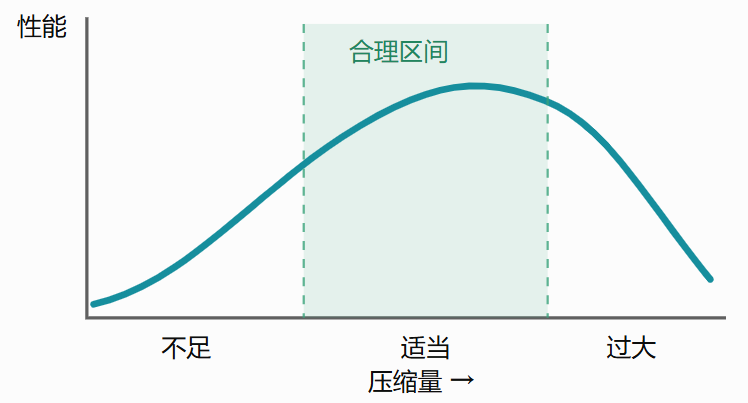
No. Hollow metal O-rings must operate within an appropriate compression range.
When compression is insufficient, contact pressure may be too low to establish an effective seal, resulting in leakage.
With appropriate compression, the O-ring develops sufficient contact pressure while retaining a certain degree of elastic recovery.
When compression is excessive, the tube wall may yield, the cross-section may become permanently flattened, and elastic recovery may decrease. In severe cases, structural damage or weld failure may occur.
The following factors should be considered when determining the appropriate compression:
Tube cross-sectional diameter and wall thickness.
Seal material and heat-treatment condition.
Sealing groove depth.
Required installation preload and compression.
Operating pressure, temperature, and sealing surface quality.
The compression ratios commonly used for rubber O-rings should not be directly applied to hollow metal O-rings.
Hollow metal O-rings are commonly used in static sealing applications involving high temperatures, cryogenic temperatures, vacuum environments, high pressures, and other conditions where conventional elastomeric seals may not provide reliable long-term performance.
Typical applications include aerospace equipment, vacuum chambers, pressure vessels, high-temperature pipeline flanges, and specialized industrial valves.
However, hollow metal O-rings require relatively precise groove dimensions, high-quality sealing surfaces, and controlled installation preload. They are generally unsuitable for conventional reciprocating or high-speed rotary sealing applications.
The primary objective of hollow metal O-ring design is not simply to maximize compression. Instead, it is to:
Establish sufficient initial contact stress within the allowable deformation range and maintain the required sealing contact force under operating temperature, pressure, and flange deformation conditions.
An important engineering consideration is the relationship between tube wall thickness, cross-sectional diameter, and sealing groove depth.
For example, consider two hollow metal O-rings with the same tube cross-sectional outer diameter of 3 mm, but wall thicknesses of 0.2 mm and 0.4 mm.
Even under identical compression, their required installation loads, deformation behavior, and elastic recovery characteristics may differ significantly.
Therefore, the sealing groove should not be designed solely according to the nominal cross-sectional dimensions. The seal's load–deflection characteristics must also be considered.
In summary, hollow metal O-rings achieve reliable sealing through the combined effects of controlled metal tube deformation, localized contact stress, elastic recovery, and microscopic surface conformity.
[DLSEALS kindly Reminder] Sealing issues? Turn to DLSEALS! As a sealing component manufacturer, we specialize in customizing sealing components, providing a full range of services from design, research and development, production, testing, and more. If you have more information you'd like to know, feel free to contact us directly. DLSEALS's product experts are dedicated to serving you!

GUANGDONG DLSEALS TECHNOLOGY CO.,LTD.
TEL/Whatsapp
:+86 15918359971ADDRESS
:No. 2 Niujiaokeng Road, Baizhoubian, Dongcheng District, Dongguan, Guangdong, China.