News
A2026-06-03
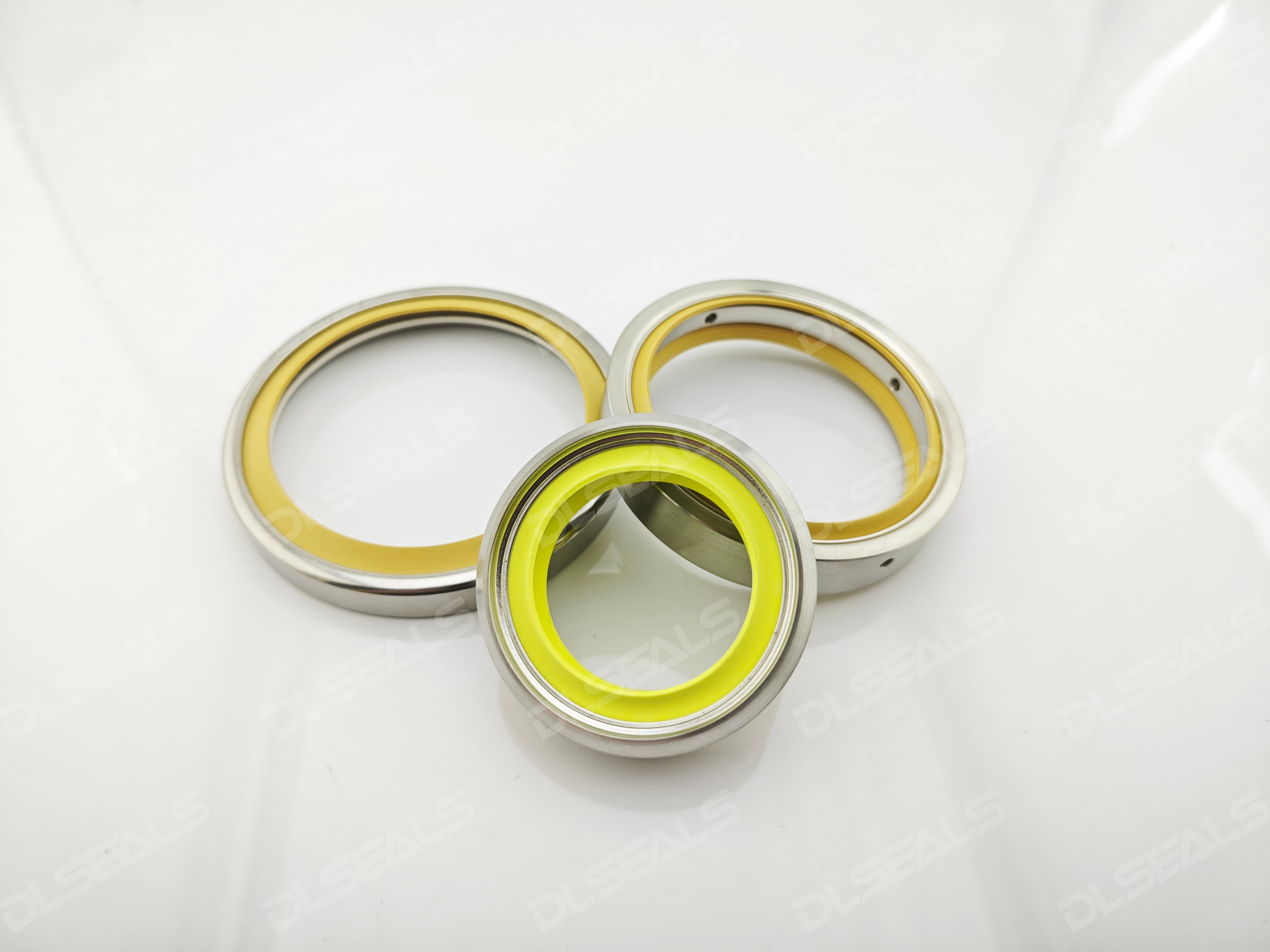
Oil seals are among the most widely used sealing components in rotating equipment. They are commonly found in pumps, gearboxes, electric motors, marine equipment, construction machinery, and industrial transmission systems. As operating environments become increasingly demanding, traditional oil seals may no longer meet the requirements of applications exposed to moisture, corrosive chemicals, or marine conditions. As a result, stainless steel oil seals have gained significant attention across various industries.
Although stainless steel oil seals and standard oil seals share a similar structure and operating principle, they differ significantly in material properties, application environments, service life, and overall cost. Understanding these differences can help engineers and purchasing professionals select the most suitable sealing solution for their equipment.
A typical oil seal consists of three main components: the elastomer sealing element, a metal case (or reinforcing skeleton), and a garter spring. The elastomer lip maintains contact with the shaft surface to prevent lubricant leakage and contaminant ingress. The spring provides constant radial force to ensure effective sealing, while the metal case supports the seal structure and ensures proper installation within the housing.
The key difference lies in the material used for the metal case. Standard oil seals typically utilize carbon steel or zinc-plated steel, whereas stainless steel oil seals employ corrosion-resistant stainless steel materials such as 304 or 316 stainless steel.
Standard oil seals are generally manufactured with carbon steel cases, offering excellent mechanical strength and cost-effectiveness. They perform well in conventional industrial environments where moisture and corrosive substances are limited. However, prolonged exposure to water, humidity, salt spray, or aggressive chemicals can lead to corrosion of the metal case, potentially compromising sealing performance.
Stainless steel oil seals offer superior corrosion resistance. Grade 304 stainless steel is suitable for most humid environments, while 316 stainless steel provides enhanced resistance to seawater, salt spray, and various chemical media due to its molybdenum content. Even under harsh operating conditions, stainless steel maintains its structural integrity and supports long-term sealing reliability.
Standard oil seals are commonly used in:
Electric motors
Gearboxes and reducers
Agricultural machinery
General hydraulic systems
Industrial pumps operating in non-corrosive environments
These applications typically do not require exceptional corrosion resistance, making standard oil seals a practical and economical choice.
Stainless steel oil seals are preferred for more demanding applications, including:
Marine propulsion systems
Seawater pumps
Offshore and marine engineering equipment
Food processing machinery
Pharmaceutical production equipment
Chemical processing systems
Wastewater treatment facilities
Outdoor construction and mining equipment
In these environments, exposure to moisture, salt, chemicals, or washdown procedures can significantly accelerate corrosion. Stainless steel oil seals provide the durability required to maintain reliable sealing performance over extended periods.
The corrosion resistance of the metal case has a direct impact on the overall lifespan of an oil seal.
In dry and controlled environments, standard oil seals can provide years of dependable service. However, in humid or corrosive conditions, corrosion may spread across the metal case and eventually affect the bond between the rubber element and the metal reinforcement. This can lead to deformation, loss of structural support, and premature seal failure.
Stainless steel oil seals are designed to withstand these challenges. Their resistance to corrosion helps maintain dimensional stability and structural strength throughout their service life. As a result, they often provide longer maintenance intervals, improved equipment reliability, and reduced risk of unplanned downtime.
For critical equipment where maintenance access is difficult or downtime costs are high, stainless steel oil seals often deliver superior long-term value despite their higher initial cost.
From an initial purchasing perspective, standard oil seals are generally more affordable and remain the most common choice for general industrial applications.
However, evaluating sealing solutions solely based on purchase price may not provide a complete picture. In marine, food processing, pharmaceutical, and chemical industries, the consequences of seal failure can be significant. Equipment downtime, maintenance labor, production losses, and component replacement costs often far exceed the price difference between standard and stainless steel oil seals.
By extending service life and reducing maintenance frequency, stainless steel oil seals frequently offer a lower total cost of ownership over the lifespan of the equipment.
Choosing the appropriate oil seal requires careful evaluation of the operating environment, media compatibility, maintenance requirements, and expected service life.
Standard oil seals are typically sufficient for equipment operating in clean, dry, and non-corrosive environments where cost efficiency is a primary consideration.
Stainless steel oil seals should be considered when equipment is exposed to:
High humidity
Saltwater or salt spray
Corrosive chemicals
Frequent washdowns
Outdoor weather conditions
Hygienic processing environments
For marine, offshore, food processing, and pharmaceutical applications, 316 stainless steel oil seals are often the preferred option due to their superior resistance to corrosion.
It is also important to match the metal case material with the appropriate sealing element. NBR (Nitrile Rubber) is commonly used for mineral oils, FKM (Viton®) offers excellent high-temperature performance, while PTFE provides exceptional chemical resistance and low friction characteristics for demanding applications. Selecting the correct combination of metal and sealing materials ensures optimal performance and longevity.
The primary difference between stainless steel oil seals and standard oil seals lies in the material of the metal case and the resulting corrosion resistance. Standard oil seals offer an economical solution for conventional industrial environments, while stainless steel oil seals provide superior durability and reliability in harsh, corrosive, and marine applications.
As industries continue to demand higher equipment reliability and longer service life, stainless steel oil seals are becoming increasingly important in marine engineering, offshore operations, food processing, pharmaceutical manufacturing, and other critical sectors. For applications where reliability, safety, and reduced maintenance are priorities, stainless steel oil seals represent a valuable long-term investment.
By understanding the strengths and limitations of each option, engineers and equipment operators can make informed decisions that improve system performance, reduce maintenance costs, and extend equipment lifespan.
[DLSEALS kindly Reminder] Sealing issues? Turn to DLSEALS! As a sealing component manufacturer, we specialize in customizing sealing components, providing a full range of services from design, research and development, production, testing, and more. If you have more information you'd like to know, feel free to contact us directly. DLSEALS's product experts are dedicated to serving you!

GUANGDONG DLSEALS TECHNOLOGY CO.,LTD.
TEL/Whatsapp
:+86 15918359971ADDRESS
:No. 2 Niujiaokeng Road, Baizhoubian, Dongcheng District, Dongguan, Guangdong, China.