News
A2026-04-20
Stainless steel oil seals (Stainless Steel Oil Seals) are precision rotary shaft sealing elements that use SUS304 or SUS316L stainless steel as the metal skeleton or outer shell, combined with high-performance elastomer lips and stainless steel tension springs. Compared with ordinary carbon steel-cased oil seals, stainless steel oil seals excel in highly corrosive, high-temperature, high-humidity, and food-grade clean environments. They have become core sealing technology in the chemical, marine engineering, food and pharmaceutical, nuclear power, and high-end automotive engine sectors. Their excellent corrosion resistance, fatigue resistance, and high-temperature stability can significantly extend seal life, reduce leakage risks, and meet strict hygiene and environmental protection standards. This article focuses on stainless steel oil seals, providing a professional and detailed technical analysis covering structural design, material selection, manufacturing processes, performance characteristics, typical applications, and technology development trends.
Ordinary carbon steel oil seals are prone to rust in humid, acidic, alkaline, or salt spray environments, leading to lip loosening, increased leakage, and even complete system failure. Stainless steel oil seals fundamentally solve this issue through the use of high-chromium-nickel stainless steel materials:
Stainless steel oil seals are particularly suitable for applications involving corrosive media, high cleanliness, or high reliability requirements, serving as an upgraded replacement for traditional oil seals in extreme operating conditions.
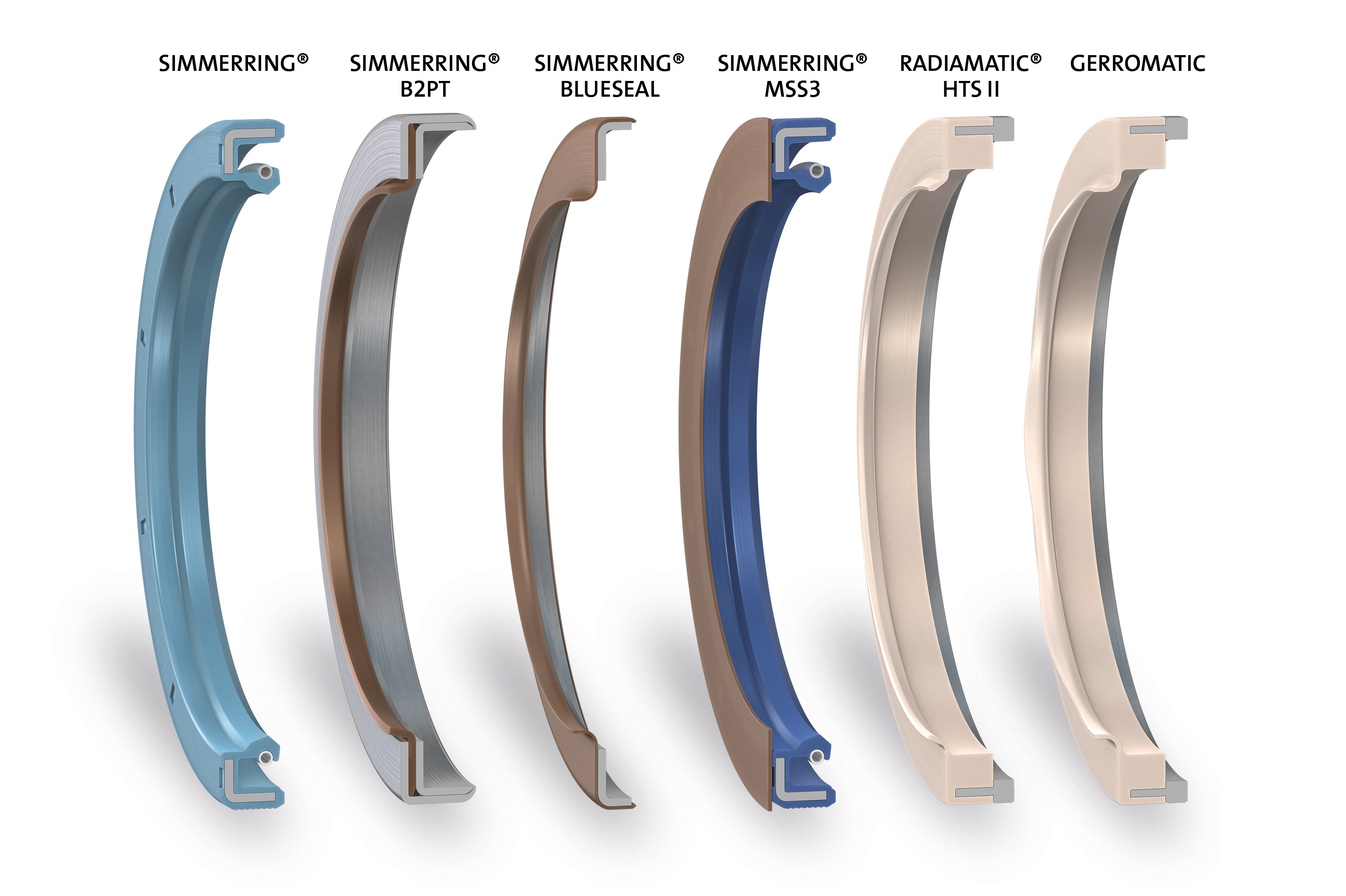
(The above images show typical stainless steel oil seal products, clearly displaying the combination of stainless steel housing and high-performance lips.)
Stainless steel oil seals adopt a composite structure, with core components including:
Common classifications:
Structural design must balance uniform radial force, lip contact width, and installation convenience, typically optimized using FEA finite element analysis for stress distribution.
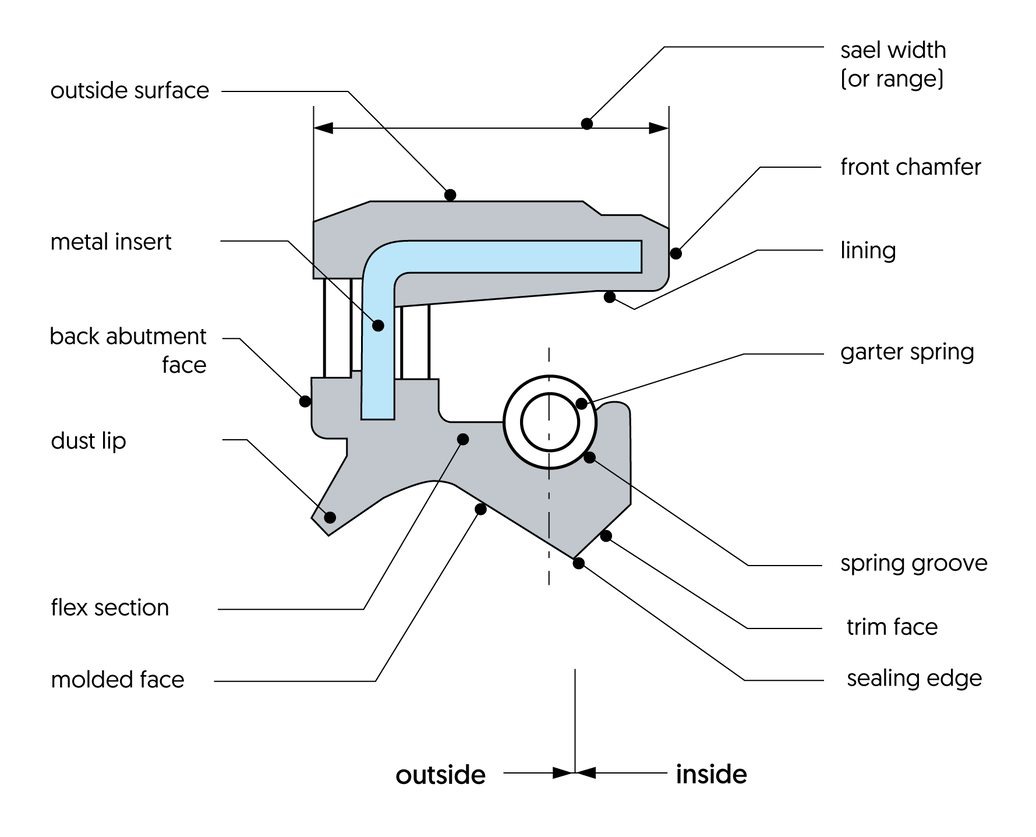
(The above image is a cross-sectional view of a stainless steel oil seal, with key components labeled.)
Materials:
Manufacturing Process (Precision Rubber-Metal Composite):
Modern production lines are fully automated, achieving dimensional accuracy of ±0.05 mm and batch consistency CpK ≥1.67.
Typical performance indicators:
Compared with carbon steel oil seals, stainless steel oil seals show significantly longer life in chloride environments, extended maintenance intervals, and lower overall cost of ownership.
Application Fields:
Installation Key Points:
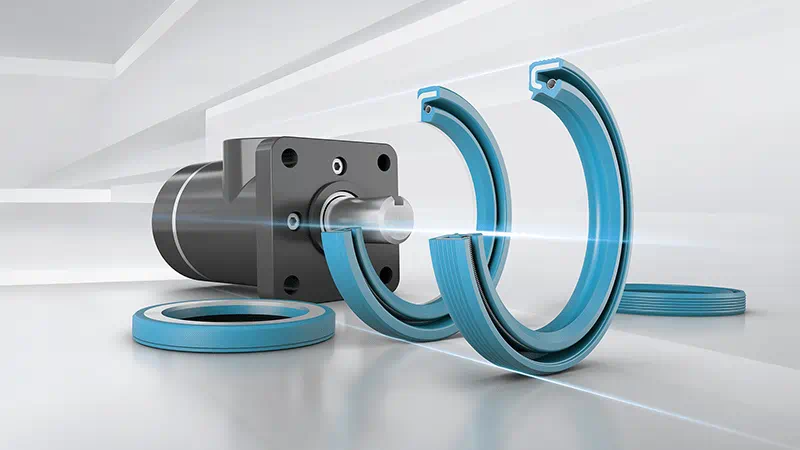
(The above images show application examples of stainless steel oil seals in food/pharmaceutical and chemical fields.)
With increasingly stringent China VI/Euro 7 emission standards and carbon neutrality requirements, the market share of stainless steel oil seals in new energy and high-end equipment will continue to expand.
Stainless steel oil seals have become an indispensable high-end sealing solution for extreme operating conditions due to their excellent corrosion resistance, reliable sealing performance, and long service life. Every optimization in materials, structure, and manufacturing process directly improves system safety and economy. For equipment designers and maintenance engineers, correctly selecting stainless steel oil seals and strictly following installation specifications is key to ensuring long-term stable operation of equipment. It is recommended to prioritize OEM or well-known brand products and combine specific operating conditions with FEA simulation and bench testing to achieve the best performance match.
[DLSEALS kindly Reminder] Sealing issues? Turn to DLSEALS! As a sealing component manufacturer, we specialize in customizing sealing components, providing a full range of services from design, research and development, production, testing, and more. If you have more information you'd like to know, feel free to contact us directly. DLSEALS's product experts are dedicated to serving you!

GUANGDONG DLSEALS TECHNOLOGY CO.,LTD.
TEL/Whatsapp
:+86 15918359971ADDRESS
:No. 2 Niujiaokeng Road, Baizhoubian, Dongcheng District, Dongguan, Guangdong, China.