News
A2026-04-15
Valve stem seals (also known as valve stem oil seals or valve guide seals) are precision sealing components essential to the cylinder head assembly of internal combustion engines. Installed between the valve guide and the valve stem, their primary function is to precisely control the thickness of the oil film formed between the valve stem and guide while preventing excessive engine oil from leaking into the combustion chamber. In modern automotive engines—especially high-revving, turbocharged, and direct-injection engines—the reliability of valve stem seals is extremely high. Their performance directly affects oil consumption, emission compliance, carbon deposit formation, and overall engine longevity. This article provides a professional and detailed technical analysis of valve stem seals, covering their working principles, structure, materials, manufacturing processes, installation and maintenance, as well as fault diagnosis.
During engine operation, the valve stem reciprocates at high speed inside the valve guide (up to tens of thousands of cycles per minute). The valve guide requires continuous lubrication to reduce friction and wear. However, uncontrolled oil leakage into the combustion chamber causes several problems:
The core principle of a valve stem seal is dynamic lip sealing. It uses an elastic lip to form a micron-level oil film on the valve stem surface while the radial force provided by an internal spring creates a “scraper” effect. This allows only a minimal amount of lubricating oil to pass through while blocking large quantities of oil from flowing down the stem into the combustion chamber. In typical designs, the permitted oil film thickness is only 0.5–2 μm, ensuring adequate lubrication with minimal leakage.
In the alternating negative and positive pressures of the intake and exhaust strokes, the seal must also withstand instantaneous pressure differentials (up to several bar) and high temperatures (locally exceeding 200°C). Therefore, its sealing performance must balance low friction, fatigue resistance, and chemical stability.
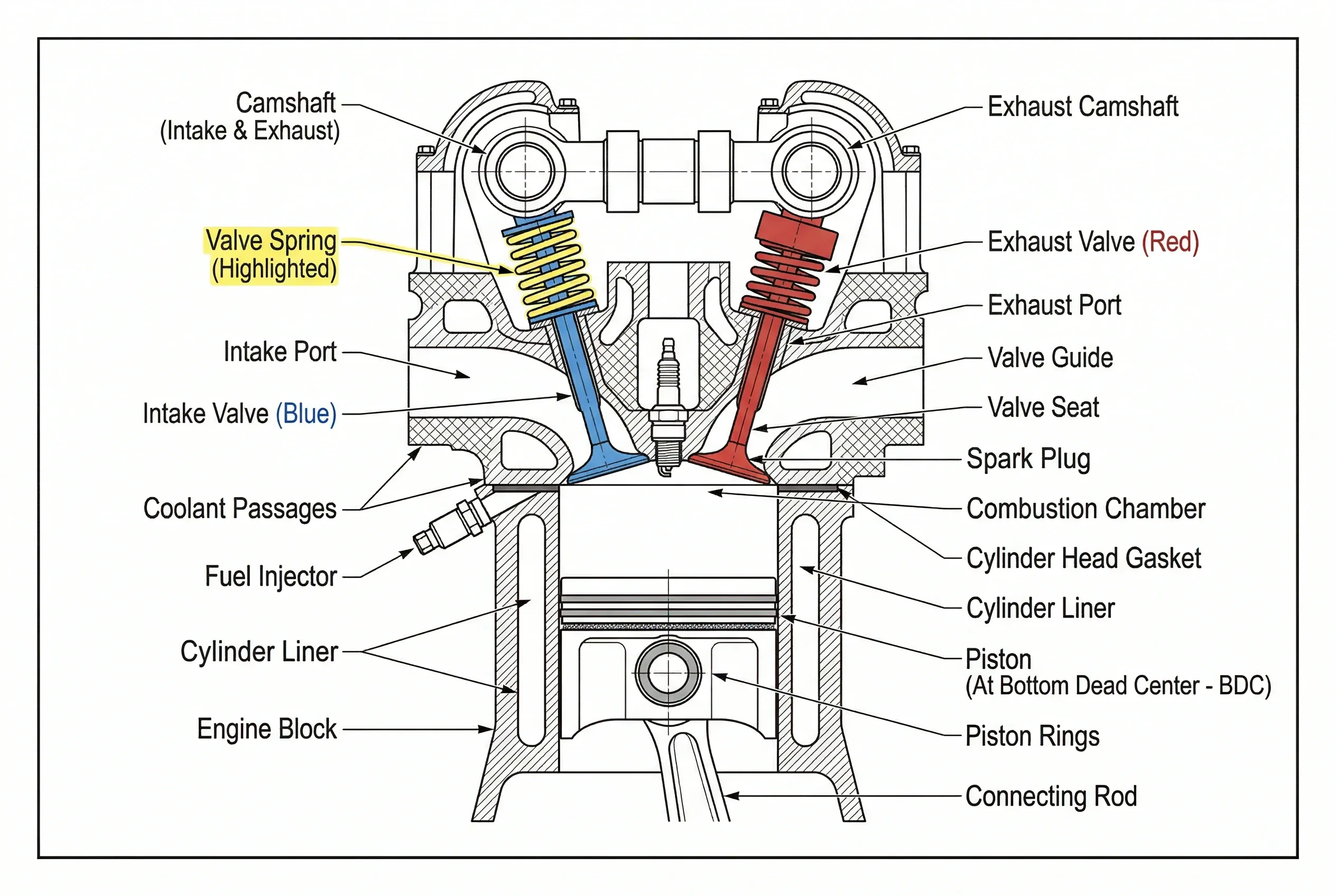
(The above images show a typical engine valve train cross-section with the valve stem seal clearly labeled.)
Modern valve stem seals generally adopt a composite structure consisting of the following key components:
Common classifications include:
Different models vary significantly in appearance: black for traditional NBR, blue/red for high-temperature FKM, and those with gold-colored metal rings for premium reinforced types.
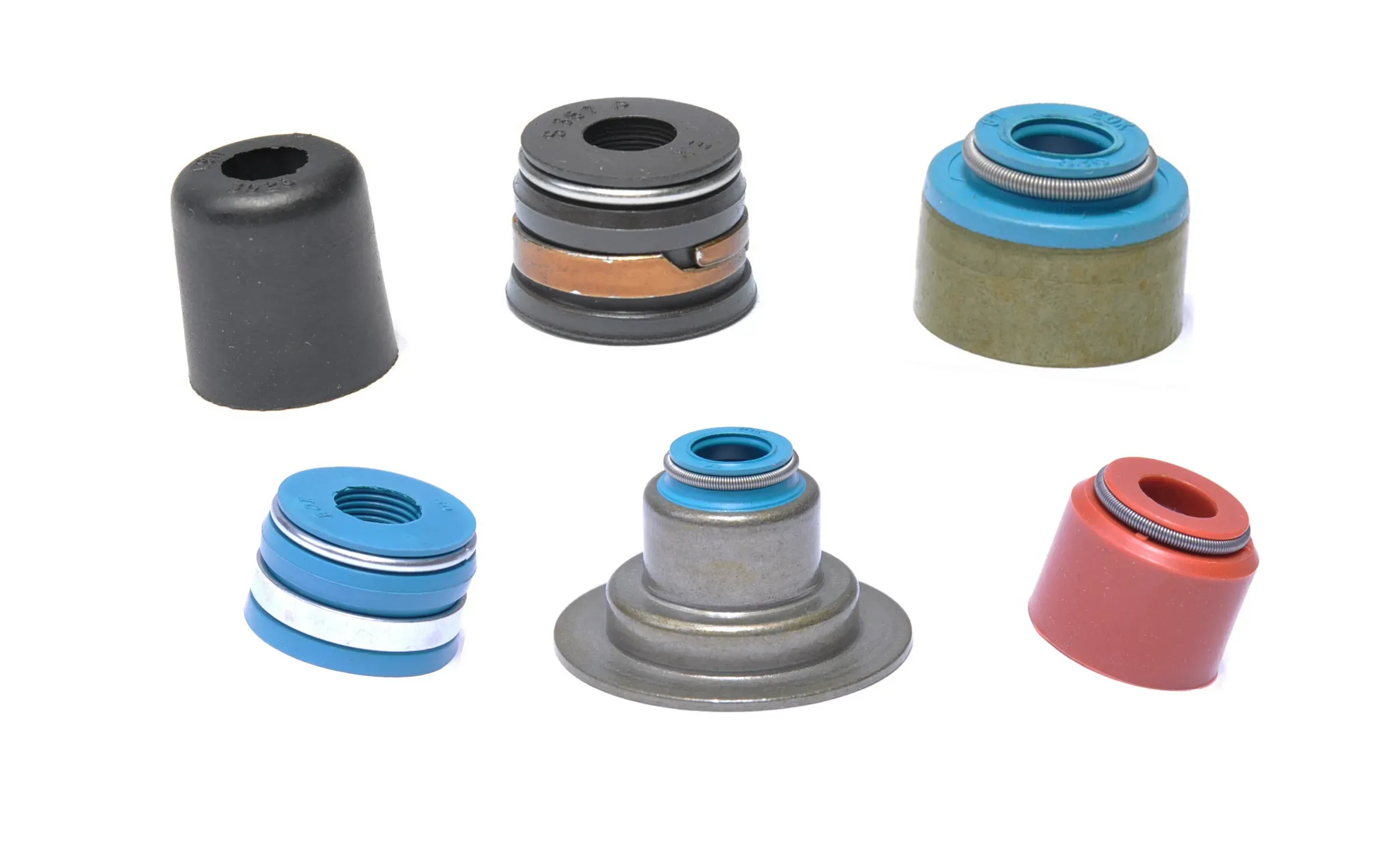
(The above images display various valve stem seals in real form along with structural details, clearly showing stainless steel springs, high-quality FKM lips, and thickened steel plates.)
Valve stem seals operate in extreme environments: temperature range from -40°C to +200°C (higher instantaneously), exposure to hot engine oil, fuel vapors, and combustion by-products, while enduring reciprocating friction and chemical corrosion. Material selection is therefore the core technology.
Typical OEM performance specifications:
Material choice directly determines seal service life: FKM-type seals can last over 150,000 km in modern turbocharged engines, while low-end NBR types may fail after only 50,000–80,000 km.
Valve stem seal production is a precision rubber-metal composite process:
Leading manufacturers (such as NOK and Freudenberg) employ fully automated production lines with 100% online radial force inspection and vacuum leak testing to ensure batch consistency.
Valve stem seal replacement is a standard procedure during major engine overhauls, usually performed together with valve lapping and guide replacement.
Key Installation Points:
Precautions: Never hammer the seal directly; use a dedicated puller when removing old seals to avoid scratching the guide.
Routine maintenance: Regularly monitor oil consumption (normal <0.5 L/1,000 km) and use OBD data to check for idle vibration or misfire codes. When abnormalities occur, inspect the valve stem seals first rather than replacing piston rings alone.
Typical fault symptoms:
Diagnostic procedure:
Resolution: Replace all seals with the same specification FKM type. It is recommended to replace the complete valve guide seal kit at the same time.
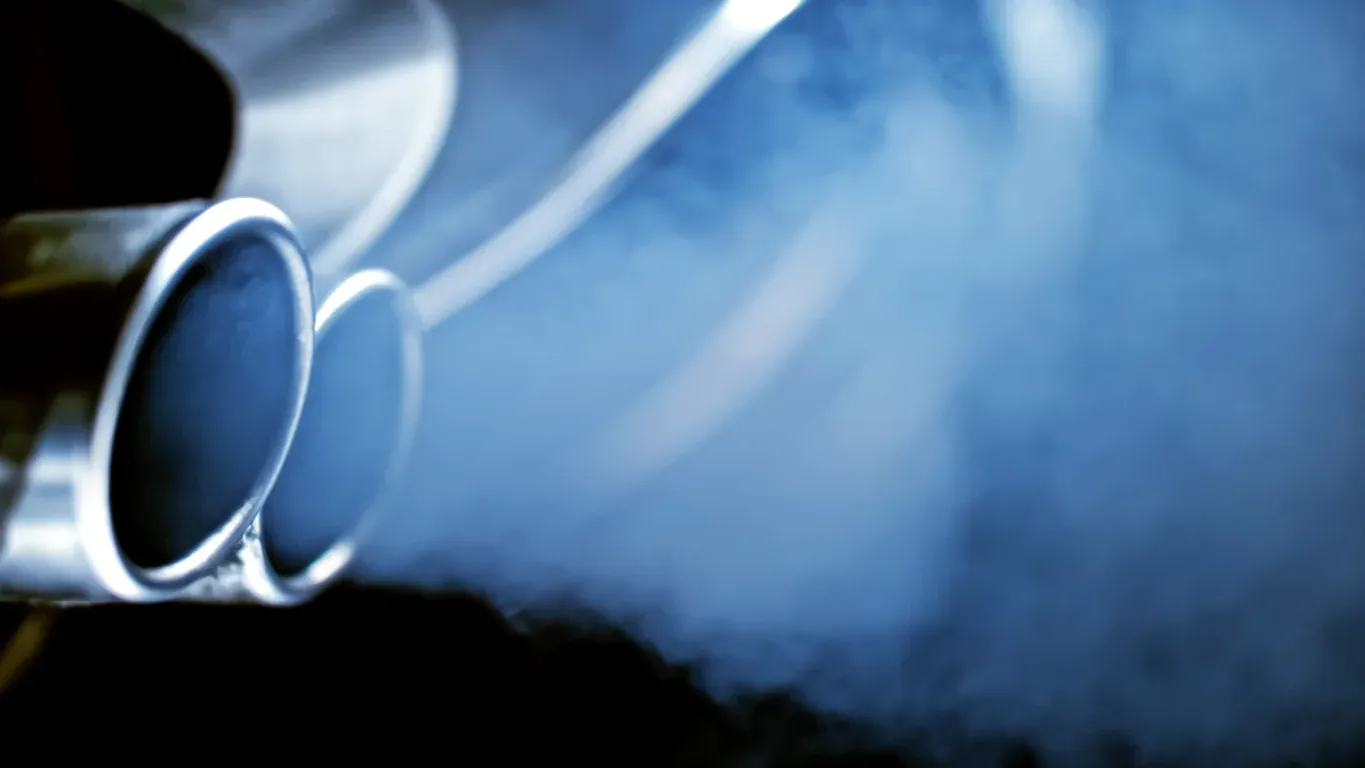
(The above image shows the typical blue exhaust smoke caused by failed valve stem seals.)
With increasingly stringent emissions regulations (China VI/Euro 7) and the trend toward electrification, valve stem seals are evolving in the following directions:
In the high-performance aftermarket (e.g., racing engines), specially formulated high-strength FKM with multi-layer springs is used to handle speeds above 8,000 rpm.
Although small in size, valve stem seals are the “invisible guardians” of efficient, clean, and reliable operation in internal combustion engines. Every advancement in their materials, structure, and manufacturing processes directly drives engines toward higher thermal efficiency and lower emissions. For engine repair technicians and R&D engineers, a deep understanding of valve stem seal technical details is key to ensuring engine performance and longevity. In practical applications, it is strongly recommended to use OEM or reputable brand FKM-material products and perform preventive replacement according to the manufacturer’s mileage/time guidelines to achieve optimal economy and reliability.
Further optimization for specific engine models can be achieved by referring to professional service manuals and OEM technical specifications. This article aims to provide automotive engineering professionals with a systematic technical reference.
[DLSEALS kindly Reminder] Sealing issues? Turn to DLSEALS! As a sealing component manufacturer, we specialize in customizing sealing components, providing a full range of services from design, research and development, production, testing, and more. If you have more information you'd like to know, feel free to contact us directly. DLSEALS's product experts are dedicated to serving you!

GUANGDONG DLSEALS TECHNOLOGY CO.,LTD.
TEL/Whatsapp
:+86 15918359971ADDRESS
:No. 2 Niujiaokeng Road, Baizhoubian, Dongcheng District, Dongguan, Guangdong, China.