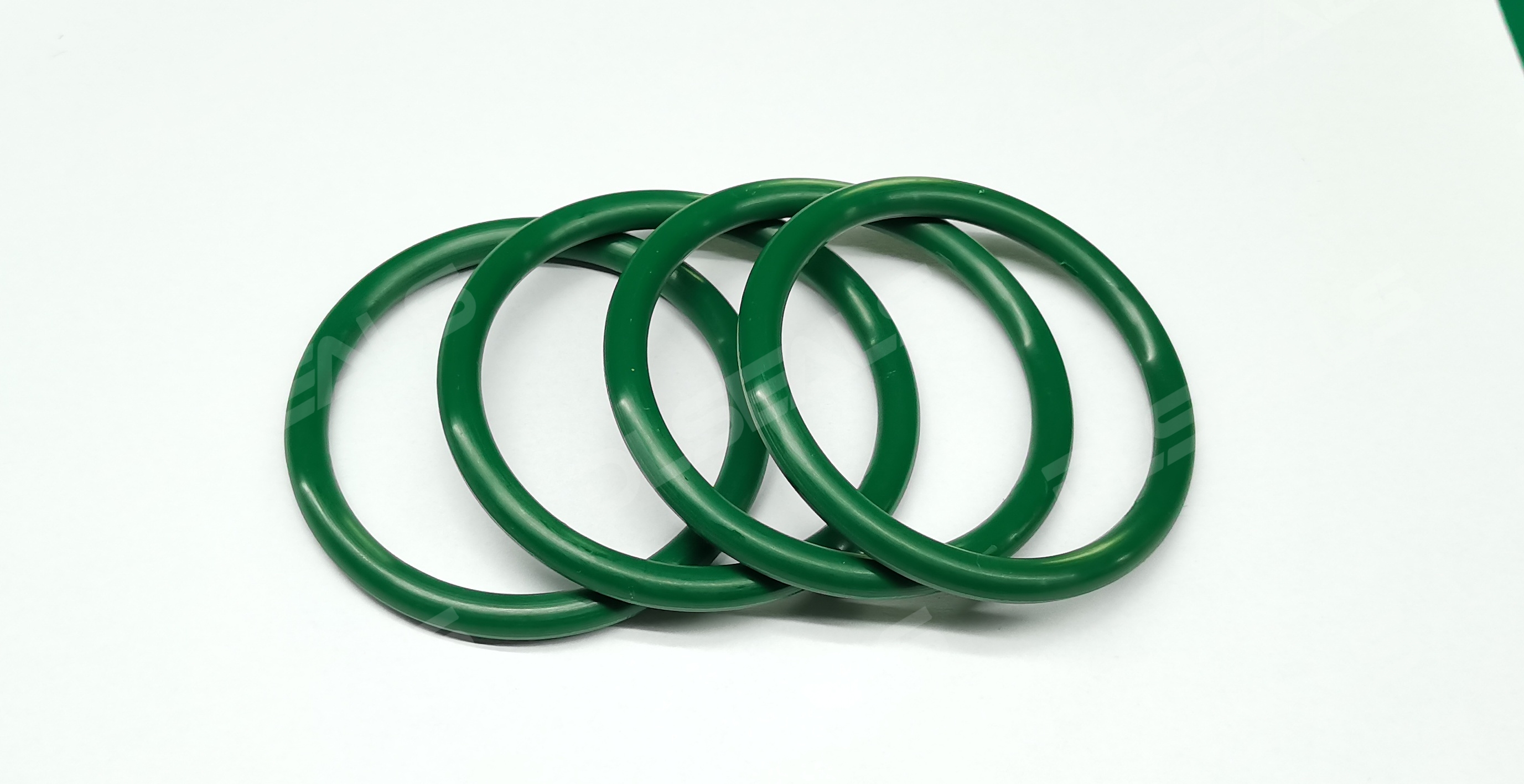
In the field of industrial sealing, plastic materials have become key choices for addressing complex operating conditions due to their unique combination of properties. Unlike rubber materials, engineering plastics generally offer higher structural strength, superior chemical resistance, and a broader temperature application range. This article focuses on several mainstream plastic sealing materials, systematically comparing their core properties, unique advantages, and typical application scenarios.
I. In-Depth Comparison of Material Properties
-
Polytetrafluoroethylene (PTFE): The King of Chemical Inertness
- Core Properties: Known as the "King of Plastics," it possesses the best chemical stability among known plastics, resistant to almost all strong acids, strong bases, and organic solvents (except molten alkali metals). Extremely low friction coefficient (0.04–0.15), extremely wide operating temperature range (−190°C to +260°C), excellent electrical insulation, and non-stick properties.
- Main Disadvantages: Pure PTFE has low hardness, prone to creep (cold flow), poor wear resistance, and poor thermal conductivity.
- Key Advantages: Irreplaceable in extreme corrosive environments and wide temperature ranges. Mechanical properties can be improved by filling with glass fiber, graphite, bronze powder, carbon fiber, etc.
-
Polyether Ether Ketone (PEEK): The Benchmark of High Performance
- Core Properties: Top-tier thermoplastic engineering plastic, combining high strength, high rigidity, ultra-high heat resistance (long-term use temperature 250°C), and excellent chemical resistance. Outstanding creep resistance and fatigue resistance, with self-lubricating and flame-retardant properties.
- Main Disadvantages: Extremely expensive, high processing temperature, and high requirements for processing equipment.
- Key Advantages: In extreme harsh environments with high temperature, high pressure, high load, and corrosive media, it provides near-metal reliability while maintaining the lightweight and easy-forming characteristics of plastics.
-
Polyamide (Nylon, e.g., PA6, PA66, PA12): Tough General-Purpose Choice
- Core Properties: High mechanical strength, good toughness, excellent wear resistance (especially oil-filled nylon), resistant to oils and aliphatic hydrocarbons. PA12 and similar types also offer good dimensional stability and low water absorption.
- Main Disadvantages: Strong hygroscopicity (affects dimensions and properties), not resistant to strong acids and bases, average temperature resistance (long-term use about 80–120°C), and average weather resistance unless modified.
- Key Advantages: Excellent balance of strength, toughness, and wear resistance, high cost-effectiveness, commonly used for sealing components that withstand high mechanical loads and wear.
-
Polyoxymethylene (POM): The Model of Rigidity and Dimensional Stability
- Core Properties: Extremely high rigidity and hardness, excellent fatigue resistance and creep resistance, outstanding dimensional stability, low friction coefficient, good wear resistance, resistant to organic solvents.
- Main Disadvantages: Poor acid and alkali resistance, especially not resistant to strong acids, average weather resistance, prone to decomposition at high temperatures.
- Key Advantages: Outstanding combination of "rigidity–dimensional stability–wear resistance," suitable for precision dynamic sealing components that need to maintain shape and dimensions long-term.
-
Ultra-High Molecular Weight Polyethylene (UHMW-PE): Outstanding Wear and Impact Resistance Performer
- Core Properties: Top-tier wear resistance among plastics, high impact strength, low friction coefficient, good self-lubrication, and excellent low-temperature performance (down to −260°C). Good chemical resistance (not resistant to oxidizing acids).
- Main Disadvantages: Poor heat resistance (long-term use temperature about 80°C), low hardness and rigidity, large thermal expansion coefficient.
- Key Advantages: Excels in low-temperature, high-wear, high-impact conditions, with high cost-effectiveness.
-
Polyphenylene Sulfide (PPS): Representative of High-Temperature Resistance and Dimensional Precision
- Core Properties: Excellent thermal stability (long-term use temperature 220–240°C), extremely high dimensional stability (almost no shrinkage), high hardness, high rigidity, strong chemical corrosion resistance (second only to PTFE and PEEK), outstanding flame retardancy.
- Main Disadvantages: High brittleness, poor toughness, low impact strength, relatively high price.
- Key Advantages: Unique advantages in sealing applications requiring high heat resistance, high dimensional precision, high rigidity, and corrosive media.
II. Core Parameters Comparison Table
| Property / Material |
Long-term Temperature Range (≈) |
Chemical Resistance (Summary) |
Mechanical Strength / Rigidity |
Wear Resistance |
Key Advantages |
Main Application Scenarios |
| PTFE |
−190 ~ +260°C |
Excellent (resists almost all chemicals) |
Low / Low (unfilled) |
Poor (unfilled) |
Chemical inertness, non-stick, low friction, wide temperature range |
Chemical corrosion-resistant seals, gaskets, stuffing boxes; food & pharma non-stick parts |
| PEEK |
−100 ~ +250°C |
Excellent (resists most aggressive chemicals) |
Extremely High / Extremely High |
Excellent |
High strength, high heat resistance, top overall performance |
High-end chemical, semiconductor, oil & gas, aerospace, racing high-pressure high-temp seals |
| Polyamide (PA) |
−40 ~ +120°C |
Good (resists oils, hydrocarbons) |
High / Medium |
Excellent |
High toughness, high wear resistance, high cost-effectiveness |
Wear rings, guide rings, bearings, oil-resistant wear seals in hydraulic equipment |
| Polyoxymethylene (POM) |
−40 ~ +100°C |
Medium (resists organic solvents) |
High / Extremely High |
Good |
High rigidity, high dimensional stability, fatigue resistance |
Precision gears, bearings, pump/valve parts, sealing structures requiring high dimensional stability |
| UHMW-PE |
−260 ~ +80°C |
Good (not resistant to oxidizing acids) |
Low / Low |
Extremely Excellent |
Ultra wear resistance, impact resistance, self-lubrication, low temperature resistance |
Wear strips, guide rails, hopper linings, wear-resistant sealing components in low-temp environments |
| PPS |
−50 ~ +240°C |
Excellent (resists aggressive chemicals) |
High / Extremely High |
Good |
Ultra-high heat resistance, ultra-high dimensional precision, high rigidity |
High-temperature pumps & valves, automotive engine peripheral heat-resistant parts, precision electronic seals |
III. Selection Logic and Application Summary
Selecting the appropriate plastic sealing material is a systematic decision-making process based on prioritizing operating conditions:
- Chemical compatibility as the primary foundation: Regardless of other properties, the material must withstand the contacted medium. PTFE, PPS, and PEEK form the first tier for strong corrosive environments.
- Temperature range defines selection boundaries: Operating temperature determines the material's survival底线. For ultra-high temperatures (>200°C), consider PEEK, PPS, PTFE; for ultra-low temperatures (<-100°C), PTFE and UHMW-PE perform excellently.
- Mechanical load determines structural strength: For sealing structures under high pressure and high load, high-rigidity and high-strength PEEK, POM, and PPS are ideal choices.
- Friction and wear conditions drive surface requirements: In dynamic sealing applications requiring low friction and high wear resistance, options include UHMW-PE, oil-filled PA, POM, and modified PTFE. Among them, UHMW-PE is the cost-effective king for wear applications.
- Dimensional accuracy and stability as key indicators: For precision sealing components that require long-term shape and dimension retention, POM and PPS's extremely low creep and excellent dimensional stability are crucial.
- Comprehensive cost-effectiveness trade-off: While meeting performance requirements, consider manufacturing cost and service life. PA, POM, and UHMW-PE offer excellent cost-effectiveness, while PEEK and PPS represent high-value investments to ensure long-term reliable operation of systems under extreme conditions.
The world of plastic sealing materials extends far beyond this. Through blending, modification, compounding (such as adding fibers or solid lubricants), and innovative manufacturing processes (such as elastomer-overmolded plastic composite seals), the performance boundaries of materials continue to expand. Understanding the essential characteristics of these base materials is the foundation for scientific selection, optimized design, and ensuring stable and reliable operation of sealing systems under various complex challenges.
[DLSEALS kindly Reminder] Sealing issues? Turn to DLSEALS! As a sealing component manufacturer, we specialize in customizing sealing components, providing a full range of services from design, research and development, production, testing, and more. If you have more information you'd like to know, feel free to contact us directly. DLSEALS's product experts are dedicated to serving you!