News
A2026-01-07
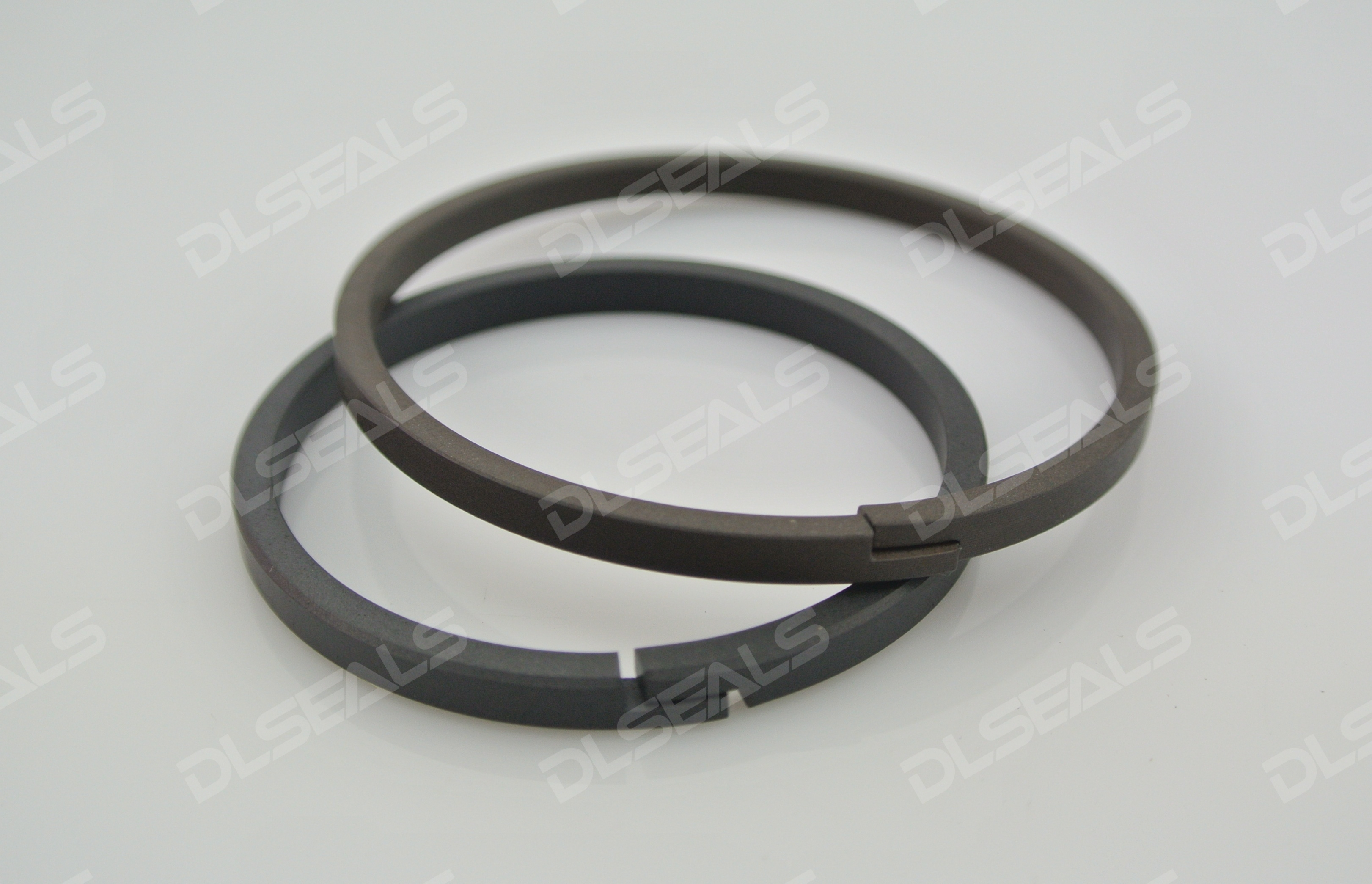
Polytetrafluoroethylene (PTFE) is renowned as the "Plastic King" in the sealing field due to its exceptional chemical stability, wide temperature resistance, and extremely low friction coefficient. However, pure PTFE suffers from inherent weaknesses such as low mechanical strength, susceptibility to creep, and poor thermal conductivity, limiting its application in high-pressure, high-speed, and long-duration operating conditions. Bronze powder, as a modifying filler, when compounded with PTFE, effectively compensates for these shortcomings, achieving a revolutionary improvement in the overall performance of seals.
1.1 Mechanical Strength and Deformation Resistance
Strengthening Mechanism: Uniformly dispersed bronze particles form a rigid skeletal network within the PTFE matrix, effectively hindering the slippage of polymer molecular chains.
Key Improvements:
Hardness: Increases from approximately 55 Shore D for pure PTFE to 65-75 Shore D for the filled compound.
Compression Creep Resistance: Anti-compressive permanent deformation ability improves severalfold, offering better shape retention under sustained pressure.
Extrusion Resistance: Significantly enhances the material's ability to resist extrusion into mating clearances under high pressure.
1.2 Friction and Wear Performance Optimization
Synergistic Effect: The PTFE matrix provides continuous lubrication, while the hard bronze phase bears the load, reduces wear, and aids in forming a stable transfer film.
Key Improvements:
Wear Resistance: Wear volume is drastically reduced, with wear life potentially increased several times compared to pure PTFE.
Limiting PV Value: Due to improved thermal conductivity, the limiting "Pressure × Velocity" value the material can withstand is significantly increased.
1.3 Fundamental Improvement in Thermal Properties
Enhanced Thermal Conductivity: Bronze particles create efficient thermal pathways, rapidly conducting frictional heat away to prevent local overheating and failure.
Key Improvements:
Thermal Conductivity: Increases from about 0.25 W/(m·K) for pure PTFE to 1.5-4.5 W/(m·K).
Dimensional Stability: The coefficient of thermal expansion is reduced, better matching that of metal components and minimizing clearance changes under thermal cycling.
2.1 Broader Range of Suitable Operating Conditions
Capable of withstanding higher pressures (e.g., hydraulic systems over 40 MPa), higher speeds, and more severe temperature cycling conditions.
2.2 Longer Service Life and Enhanced Reliability
Benefiting from excellent creep resistance, wear resistance, and extrusion resistance, seal life often increases by an order of magnitude, reducing downtime for maintenance.
2.3 Higher System Efficiency
A consistently low coefficient of friction helps reduce starting and running resistance, lowering energy consumption. Effective leakage control improves overall system efficiency and cleanliness.
Hydraulic Systems in Heavy Engineering Machinery: Used for piston and piston rod seals in high-pressure cylinders, enduring severe shock loads.
Aerospace Actuation Systems: Meeting requirements for high pressure, wide temperature ranges (-54°C to +200°C and above), and long life.
High-Performance Automotive: Used in shock absorbers and powertrain seals for racing or high-end vehicles.
Chemical Process Pumps and Valves: Providing more reliable sealing and longer service life than pure PTFE in corrosive media.
4.1 Bronze Content
Typically ranges from 20% to 60% by volume. Higher content improves hardness, thermal conductivity, and wear resistance, but reduces material elasticity. Balancing is needed based on specific operating conditions.
4.2 Structural Design
Often used in combination with elastomers (e.g., O-rings) to form advanced sealing assemblies (such as Glyd rings, Step seals) based on the "elastic loading + wear-resistant sliding" principle, compensating for loss of elasticity and achieving better sealing performance.
4.3 Process Control
The particle size, morphology, and surface treatment of the bronze powder, as well as mixing and sintering processes, directly affect the homogeneity and final properties of the composite material.
The combination of PTFE and bronze successfully achieves a perfect synergy of "overcoming hardness with softness" and "reinforcing softness with hardness." It is not a simple material mix but the creation of a new composite material with synergistic performance enhancement through meticulous material design and process control, expanding the application boundaries of PTFE seals to unprecedented levels.
Looking ahead, with the advancement of cutting-edge technologies such as nanotechnology, functionally graded material design, and the integration of smart sensors, PTFE-based composite seals will continue to evolve towards higher performance, longer life, and even self-sensing capabilities, providing crucial assurance for the reliable and efficient operation of high-end equipment.
[DLSEALS kindly Reminder] Sealing issues? Turn to DLSEALS! As a sealing component manufacturer, we specialize in customizing sealing components, providing a full range of services from design, research and development, production, testing, and more. If you have more information you'd like to know, feel free to contact us directly. DLSEALS's product experts are dedicated to serving you!

GUANGDONG DLSEALS TECHNOLOGY CO.,LTD.
TEL/Whatsapp
:+86 15918359971ADDRESS
:No. 2 Niujiaokeng Road, Baizhoubian, Dongcheng District, Dongguan, Guangdong, China.