News
A2026-05-18
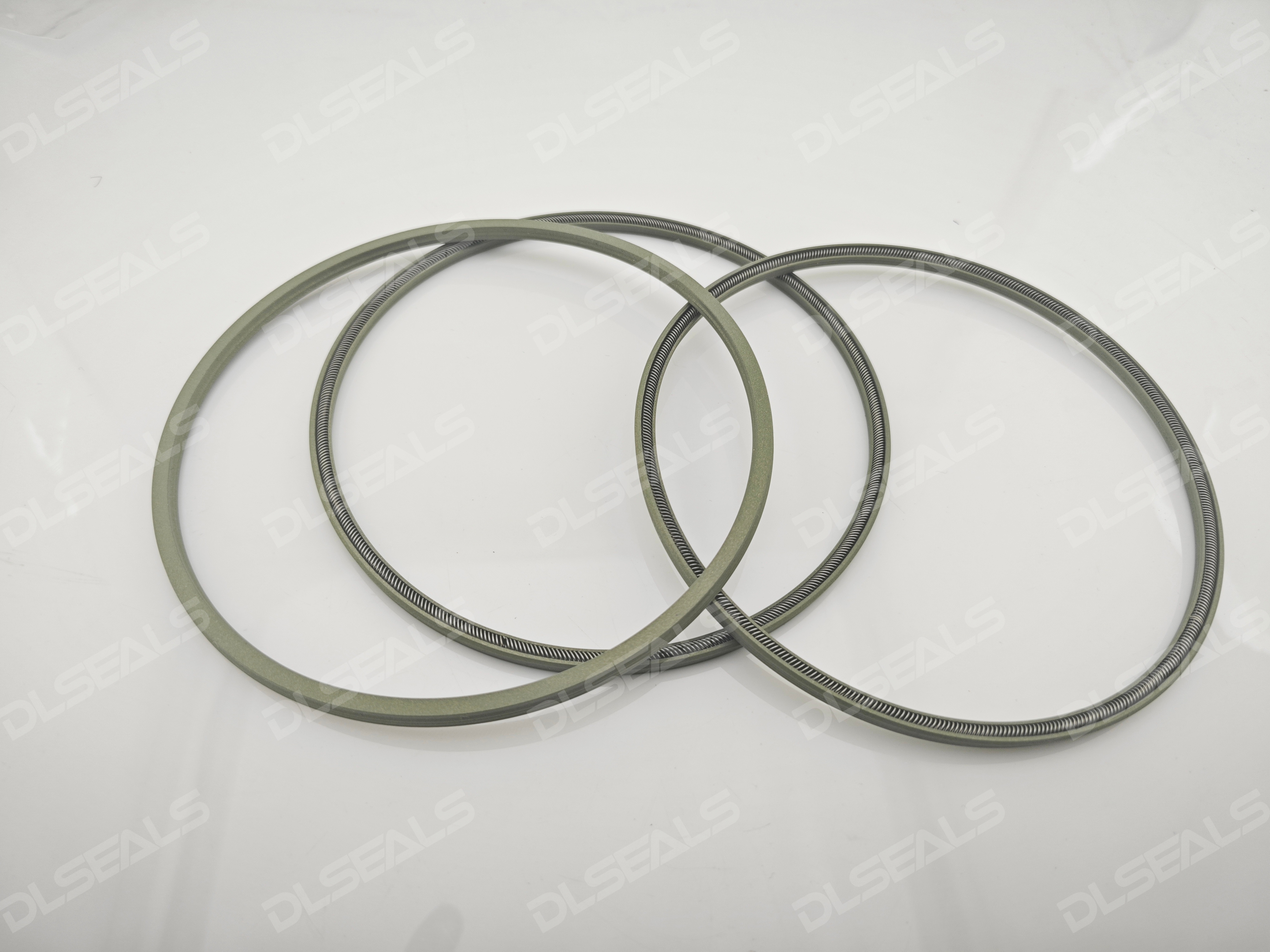
In the field of high-end industrial sealing, Spring Energized Seals have become critical components for solving leakage in extreme operating conditions due to their outstanding pressure resistance, temperature tolerance, and long service life. When selecting the jacket material for a spring energized seal, PTFE (Polytetrafluoroethylene) and UPE (Ultra-High Molecular Weight Polyethylene) are the two star materials most frequently compared. Although they look similar, they possess entirely different "performance DNAs." This article delivers a deep dive into the material properties, core differences, and application scenarios to help you navigate this ultimate material showdown.
PTFE Seals (Teflon): The All-Around Performer with Zero Blind Spots PTFE is the ultimate representative of fluoroplastics. The outside of its molecular chain is fully shielded by massive fluorine atoms, forming extremely strong carbon-fluorine (C-F) covalent bonds. This grants PTFE spring energized seals two exceptionally powerful attributes: an ultra-wide temperature range and near-total immunity to chemical corrosion.
UPE Seals (UHMW-PE): The Hardcore Wear & Extrusion Expert UPE belongs to the polyethylene family, but boasts a molecular weight in the millions. Its ultra-long molecular chains are tightly entangled, giving UPE spring energized seals unparalleled mechanical strength, impact resistance, and wear resistance that ranks at the very top of both the rubber and plastics industries.
Temperature Range: PTFE wins (-200°C to +260°C) vs. UPE (-150°C to +85°C, up to 100°C modified). PTFE remains stable at high temperatures, whereas UPE softens and creeps above 90°C.
Wear Resistance: UPE wins completely. Its abrasion resistance is 4-5 times higher than PTFE and 4-7 times higher than carbon steel.
Extrusion & High Pressure: UPE wins. It features high toughness and high yield strength, preventing the "cold flow" or extrusion behavior common to PTFE under heavy loads.
Chemical Compatibility: PTFE wins. It is nearly inert to all acids, bases, and solvents, while UPE can be sensitive to strong oxidizing acids.
Friction Coefficient: PTFE wins slightly (0.04 - 0.10), providing the lowest stick-slip threshold for precision low-speed instruments.
Particulate Resistance: UPE wins. Its high flexibility allows it to deflect or encapsulate hard particles (silt, slurry, crystals) without scratching the seal lip.
When MUST You Choose UPE Seals?
Media with Silt, Crystals, or Hard Particles: Such as hydraulic fracturing pumps, slurry pumps, and chemical processes with crystallizing liquids. A PTFE lip will quickly scratch. UPE repels particles without damaging the sealing interface.
Dynamic Seals under High Pressure with Clearances: Valve stems and high-pressure hydraulic cylinders where PTFE would undergo "cold flow" and extrude into gaps.
When MUST You Choose PTFE Seals?
Operating Temperatures Exceeding 100°C: Where UPE would soften and fail completely.
Highly Corrosive Unidentified Media or High-Temperature Steam: PTFE offers universal compatibility in chemical processes where UPE might swell or degrade.
Selection Summary: PTFE wins on Versatility — Conquering high-end chemical and aerospace sectors via its unrivaled temperature and corrosion limits. UPE wins on Strength — Subduing high-pressure, abrasive, and sandy environments via its unmatched wear and extrusion resistance.
[DLSEALS kindly Reminder] Sealing issues? Turn to DLSEALS! As a sealing component manufacturer, we specialize in customizing sealing components, providing a full range of services from design, research and development, production, testing, and more. If you have more information you'd like to know, feel free to contact us directly. DLSEALS's product experts are dedicated to serving you!

GUANGDONG DLSEALS TECHNOLOGY CO.,LTD.
TEL/Whatsapp
:+86 15918359971ADDRESS
:No. 2 Niujiaokeng Road, Baizhoubian, Dongcheng District, Dongguan, Guangdong, China.