News
A2026-01-05
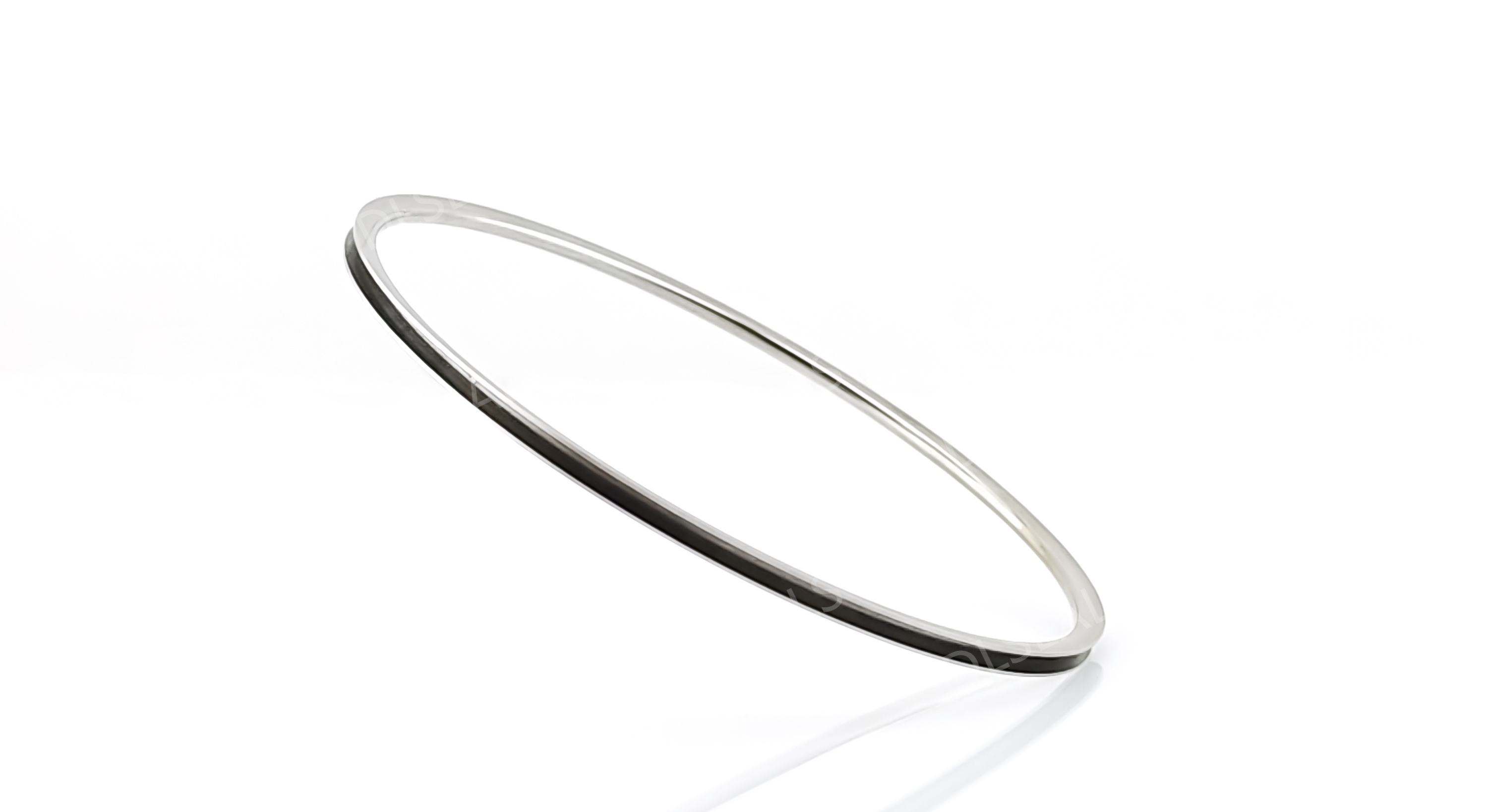
In high-end industrial sectors such as energy and power, petrochemicals, and aerospace, equipment often operates continuously under extreme conditions of high temperature and high pressure. The correct material choice for a seemingly minor sealing ring directly impacts the sealing integrity, operational safety, and economic efficiency of the entire system. When faced with the combined challenge of an ultra-high working pressure of 13.76 Megapascals (MPa) and a limiting working temperature of 568 degrees Celsius (°C), this selection becomes a severe test involving materials science, mechanics, and corrosion science. This article delves into the core considerations, mainstream options, and selection logic for sealing ring materials under such extreme conditions.
The combination of 13.76 MPa & 568°C typically appears in steam pipelines and turbine casings of modern, highly efficient ultra-supercritical thermal power units, key circuits of advanced nuclear power plants, or certain large-scale chemical reactors. Its challenging nature is evident in:
High-Temperature Effects: 568°C far exceeds the long-term service temperature limits of most common engineering materials (e.g., rubbers, common plastics). At this temperature, materials face creep (slow plastic deformation under stress), stress relaxation (decay of stress over time), microstructural phase transformations (leading to performance degradation), and significantly accelerated oxidation/corrosion.
High-Pressure Effects: The enormous pressure of 13.76 MPa (approximately 136 standard atmospheres) requires the sealing material to possess extremely high compressive strength and extrusion resistance (anti-blowout capability) to prevent the material from being forced into flange gaps and failing.
Coupling Effects: High temperature significantly reduces material strength and hardness, weakening its resistance to high pressure. Conversely, high pressure can accelerate deformation processes at elevated temperatures. Additionally, thermal cycling (temperature fluctuations during startup/shutdown) introduces additional thermal stress and fatigue issues.
Under these conditions, traditional elastomers (rubbers) and most plastics are entirely unsuitable, and even some metals may be inadequate. The selection focuses on the following categories of high-performance materials:
1. Nickel-Based Superalloys – The Top-Tier Performance Choice
This is the most reliable and widely applied solution for these conditions.
Typical Grades: Inconel 718, Inconel X-750, Hastelloy C-276, etc.
Core Advantages:
Exceptional High-Temperature Strength: Maintains excellent yield strength and creep resistance above 600°C.
Outstanding Oxidation and Corrosion Resistance: Capable of long-term resistance to high-temperature steam oxidation and corrosion from various media.
Good Relaxation Resistance: Able to maintain sufficient sealing specific pressure for extended periods, ensuring lasting tightness.
Application Forms: Typically machined into spiral-wound gaskets (with alloy windings + flexible graphite/ceramic filler) or metal ring joints (octagonal/oval rings). For applications requiring elasticity, specially designed alloy "C"-rings or "E"-rings can be used.
2. Special High-Temperature Alloy Steels – The Cost-Effective Option
In applications where temperature and pressure are at the critical limit or cost control is stringent, some modified alloy steels can be considered.
Typical Grades: Austenitic stainless steels or iron-nickel-based alloys such as AISI 347, Incoloy 800H/825.
Core Advantages: Maintain good overall performance at 568°C, with significantly lower cost than nickel-based alloys.
Important Notes: Requires rigorous evaluation of its tendency for sigma phase embrittlement, resistance to stress corrosion cracking, and long-term stress relaxation behavior under sustained high temperature. Typically suitable for applications with slightly lower life and reliability requirements than those demanding nickel-based alloys.
3. High-Performance Flexible Graphite – An Excellent Filler and Auxiliary Material
Pure flexible graphite cannot alone withstand such high mechanical pressure, but it plays a key supporting role.
Core Application: Serves as the core filler material in spiral-wound gaskets or as a coating on metal gasket surfaces.
Core Advantages:
Excellent Thermal Stability: Usable above 1000°C in non-oxidizing atmospheres, with an oxidation resistance temperature in steam around 500-600°C (oxidation rate must be evaluated).
Superior Conformability and Sealability: Conforms well to microscopic flange surface irregularities, ensuring initial sealing.
Self-Lubrication: Reduces damage to flange surfaces.
Key Limitation: Must be used in combination with high-strength metal windings (e.g., the aforementioned alloys), where the metal bears the primary mechanical load, and the graphite provides conformity and seals micro-defects.
4. Advanced Ceramics and Metal Matrix Composites – Frontier Research Directions
For more extreme conditions or special requirements, these materials are at the forefront of R&D and application.
Ceramics: Such as alumina or silicon nitride, offering extreme hardness, temperature resistance, and chemical inertness, but are brittle and demand very high flange flatness and precise assembly.
Metal Matrix Composites (MMCs): Such as silicon carbide particle-reinforced aluminum alloy matrices, designed to enhance high-temperature strength and wear resistance, but are high-cost and complex to manufacture.
Selecting the correct material category must be accompanied by careful attention to design and process details:
Paramount Importance of Structural Design: Under extreme conditions, "Material" and "Structure" must be considered as one. For instance, the "W" profile of the metal winding in a spiral-wound gasket, its fill percentage, and winding density; the line-contact design of metal ring joints (e.g., octagonal rings) can significantly enhance pressure resistance and sealing performance for the same material.
Surface Treatments and Coatings: Applying silver plating, copper plating, or nickel-based alloy spray coatings to metal sealing surfaces can effectively lower the required sealing stress, improve conformity, prevent galling, and compensate for minor surface imperfections.
Stringent Quality Control: Raw materials must comply with strict standards like AMS or ASTM; production must control grain size, heat treatment status (e.g., aging treatment is crucial for Inconel 718); finished products require comprehensive dimensional inspection, hardness testing, and necessary spectroscopic analysis.
In summary, for the high-level industrial conditions represented by 13.76 MPa and 568°C, spiral-wound gaskets with a nickel-based superalloy (e.g., Inconel 718) as the metal skeleton, combined with high-performance flexible graphite filler, are currently the most mature, reliable, and widely adopted sealing solution. For absolutely critical static seals requiring ultimate reliability and zero leakage, metal ring joints (R/Oval rings) made of nickel-based alloys are the superior choice, albeit with higher demands on flange groove machining precision and installation.
Recommended Selection Decision Path:
Primary Choice: Spiral-wound gaskets or metal ring joints made of Inconel 718. This is the standard answer to meet the operational demands, prioritizing safety and long-term operation.
Cost-Optimized Choice: Under strictly evaluated conditions confirming non-aggressive media, infrequent cycling, and acceptable design life requirements, solutions using Incoloy 800H or AISI 347 can be considered, but must be validated by highly experienced engineers.
Strictly Prohibited: The use of any form of non-metallic elastomer, Polytetrafluoroethylene (PTFE) or its modifications, or common austenitic stainless steels (e.g., 304/316) as the primary sealing material.
Ultimately, selecting a sealing ring material for such severe parameters is not a simple material substitution but a systematic decision-making process involving system design, operating condition analysis, materials science, and engineering experience. In-depth technical communication with experienced sealing engineers and reputable specialized suppliers, along with necessary simulation verification or prototype testing, is the final guarantee for achieving "leak-free and fail-safe" operation of critical equipment.
[DLSEALS kindly Reminder] Sealing issues? Turn to DLSEALS! As a sealing component manufacturer, we specialize in customizing sealing components, providing a full range of services from design, research and development, production, testing, and more. If you have more information you'd like to know, feel free to contact us directly. DLSEALS's product experts are dedicated to serving you!

GUANGDONG DLSEALS TECHNOLOGY CO.,LTD.
TEL/Whatsapp
:+86 15918359971ADDRESS
:No. 2 Niujiaokeng Road, Baizhoubian, Dongcheng District, Dongguan, Guangdong, China.