News
A2026-06-17
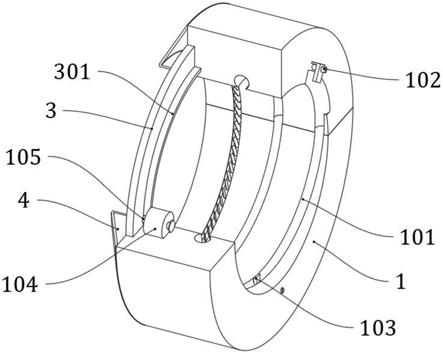
In massive wind turbine generators, people's attention is often drawn to the hundred-meter-long blades, the gargantuan nacelle, or the high-speed gearbox humming inside. However, hidden deep within this "aerial behemoth" is a critical component, spanning meters in diameter, that quietly dictates the lifespan of the entire system: the main shaft seal.
The main bearing is the core drivetrain component of a wind turbine, enduring severe aerodynamic loads and intense vibrations. Serving as the "body armor" for this main bearing, the main shaft seal's failure does not just mean the leakage of expensive grease—it allows external rainwater, salt spray, and dust to infiltrate the bearing, triggering catastrophic mechanical failures.
The operational environment faced by wind turbine main shaft seals is considered one of the most brutal extremes in the entire industrial sealing sector:
Ultra-Large Diameters and Flexible Deformation: As wind turbine capacities soar into the era of 15MW to 20MW+, main shaft diameters routinely reach 2 to 5 meters. Large diameters mean the seals are highly prone to deformation during manufacturing, transportation, and installation. Furthermore, the bearing experiences inevitable radial runout and axial displacement during operation, demanding exceptional "followability" from the seal.
The Cruel Toll of Extreme Climates: From freezing Siberian-like winters of -40℃ in northern deserts to scorching summers exceeding 50℃, coupled with the year-round corrosive high salt spray and high humidity of offshore environments, the sealing material must resist severe aging or cracking over a 20-year design lifespan.
Micro-Vibrations and Low-Speed Wear: The main shaft rotates at a very low speed (approx. 8 to 20 RPM). This prevents the seal lip from forming a perfect hydrodynamic oil film, leaving it in a state of boundary lubrication or dry friction for extended periods. This places ultimate demands on the material's wear resistance.
To achieve zero leakage and long service life under such harsh conditions, several mainstream sealing structures have evolved in the industry:
This is currently the most common primary or auxiliary sealing method used on wind turbine main shafts. Completely made of pure elastomer, the V-ring is mounted directly on the shaft and rotates with it, its elastic lip pressing firmly against the counter-face of the bearing housing.
Advantages: Simple to install; utilizes centrifugal force to fling away most of the rainwater and dust directed at the bearing.
Limitations: Cannot withstand fluid pressure; typically serves as the first line of defense against water and dust.
To accommodate the large runout of the main shaft, modern wind turbines frequently employ customized, large elastomeric lip seals. These seals are usually embedded with a specially designed metal skeleton or finger springs.
Advantages: The finger springs provide a continuous and uniform radial clamping force. Even when the main shaft deflects under heavy wind loads, the sealing lip hugs the shaft surface like a shadow.
Split Design Technology: This is a crucial innovation in the wind sector. To avoid dismantling the entire main shaft assembly during routine maintenance, these seals are engineered with a "split" structure. They can be joined on-site using specialized hot vulcanization tools or mechanical locking mechanisms, dramatically cutting operations and maintenance (O&M) costs.
In high-tech, large-megawatt turbines, a single rubber seal can rarely handle the job alone. A composite system combining a "labyrinth seal + lip seal" has become the gold standard. The outer labyrinth structure uses tortuous geometric paths to block over 90% of rainwater and grit, while the inner lip seal specializes in containing the internal grease. Together, they achieve flawless protection.
Material technology represents half the battle in main shaft seal R&D. Currently, high-end wind turbine main shaft seals rely predominantly on the following high-performance elastomers:
| Material Type | Core Advantages | Primary Application Scenarios |
| HNBR (Hydrogenated Nitrile Butadiene Rubber) | Excellent wear and tear resistance; outstanding aging resistance and low-temperature performance (down to below -40℃). | The preferred material for mainstream large-megawatt turbine main shaft seals, offering the most balanced overall performance. |
| FKM (Fluorocarbon Rubber) | Unmatched resistance to high temperatures above 200℃, chemical media, and salt spray. | Frequently used in high-heat southern regions or the high-speed drive-end of offshore wind turbines; requires special modification for low-temperature performance on the main shaft side. |
| High-Performance Polyurethane (PU) | Mechanical strength and wear resistance several times higher than conventional rubber. | Commonly made into specialized wiper rings to combat ferocious sandstorms in arid, desert-bound land-based wind farms. |
The wind turbine main shaft seal, though merely a ring-shaped component among tens of thousands of parts, bears the monumental responsibility of protecting the machine's core power source from environmental assault. From the relentless refinement of material formulas to the precision engineering of structural designs, the quiet iteration of this small seal is what silently empowers human green energy to break waves and forge ahead into deeper, more distant seas.
[DLSEALS kindly Reminder] Sealing issues? Turn to DLSEALS! As a sealing component manufacturer, we specialize in customizing sealing components, providing a full range of services from design, research and development, production, testing, and more. If you have more information you'd like to know, feel free to contact us directly. DLSEALS's product experts are dedicated to serving you!

GUANGDONG DLSEALS TECHNOLOGY CO.,LTD.
TEL/Whatsapp
:+86 15918359971ADDRESS
:No. 2 Niujiaokeng Road, Baizhoubian, Dongcheng District, Dongguan, Guangdong, China.