News
A2026-06-15
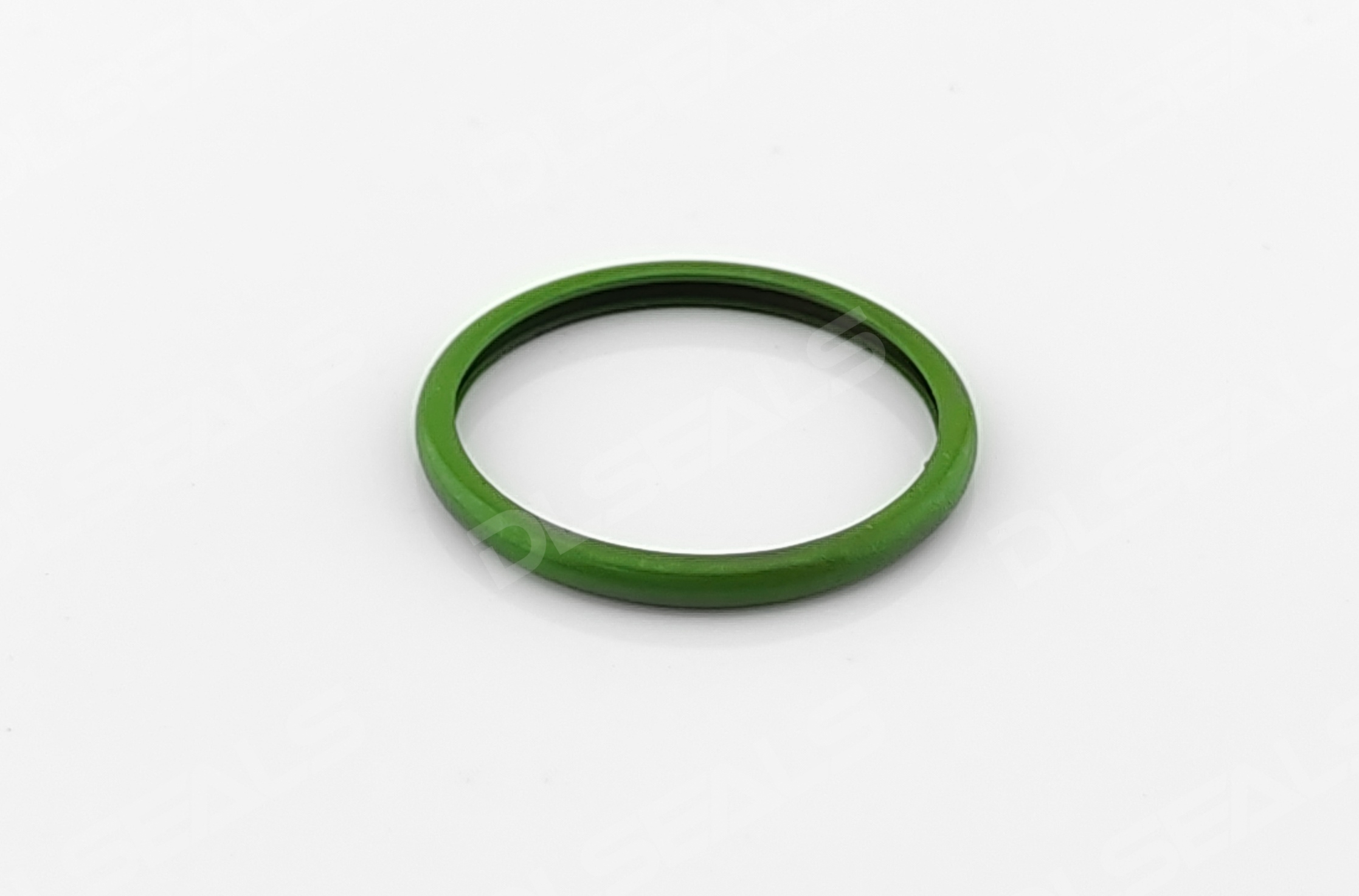
In extreme operating conditions such as aerospace, semiconductor equipment, nuclear power, and ultra-high vacuum, traditional rubber or plastic seals often lead to failure because they cannot withstand ultra-high temperatures, ultra-low temperatures, strong corrosion, or ultra-high pressures. At this time, metal sealing rings (such as metal O-rings, E-rings, and spring energized C-rings) become the ultimate solution to keep the safety baseline.
As a professional manufacturer of metal sealing rings, every qualified metal sealing ring is backed by a combination of multiple high-precision core production processes ranging from material selection to surface modification.
The manufacturing of metal sealing rings begins with the precision cold working and forming of metal tubes, plates, or strips.
Metal O-Rings: The core adopts high-performance hollow thin-walled metal tubes (such as SUS321, SUS316L, Inconel 718, etc.). It is accurately rolled into a circular shape by special tube bending equipment.
Metal C-Rings & E-Rings: Usually made of metal strips, which are processed into specific "C"-shaped or "E"-shaped cross-sections through multi-pass continuous roll forming or stamping processes. The complex geometric folds of E-rings are crucial to the rebound performance, so the precision requirements for the mold are extremely high.
Spring Energized C-Rings: After the C-ring is formed, a precision-welded high-elasticity inner lining spring (such as a helical spring) needs to be embedded into the C-ring cavity manually or through automated tooling to provide continuous high resilience.
After forming, both ends of the metal ring need to be butt-welded and closed. The quality of the welding point directly determines the pressure limit and service life of the sealing ring.
Automatic Flash Butt Welding / Argon Arc Welding (TIG): Commonly used for butt jointing of ordinary industrial grade metal rings.
Micro-beam Plasma Welding & Laser Welding: The preferred choice for cutting-edge fields (such as semiconductors, aerospace). Laser welding features a very small heat-affected zone (HAZ), smooth welds, and no spatter, ensuring that the wall thickness and strength at the butt joint of the tube are almost identical to those of the base material, avoiding cracking from the weld seam under ultra-high pressure.
After welding is completed, a slight excess weld height will remain at the joint.
Precision Grinding: It must be completely flattened by a high-precision grinder or manual fine polishing, so that the roundness, roughness, and tube diameter at the welded joint are completely consistent with other parts. If there are micron-level unevennesses at the weld seam, it will directly lead to gas leakage in an ultra-high vacuum environment.
Tooling Sizing: The ground metal ring is placed into a special sizing mold for cold correction to ensure that the flatness and roundness of the entire ring meet the tolerance standards.
Metal generates a lot of processing stress after rolling, forming, and welding. To restore the elasticity and fatigue life of the material, strict heat treatment must be carried out.
Solution Annealing & Vacuum Annealing: Heating in a high-vacuum heat treatment furnace eliminates cold working stress and prevents the metal ring from hardening and cracking.
Age Hardening: For precipitation-hardening high-temperature alloys such as Inconel 718 and Inconel X-750, through long-term insulation aging treatment at a specific temperature, the precipitation strengthening phase is stimulated, so that the metal ring still maintains extremely high resilience and creep resistance at high temperatures of 800°C+.
Since metal itself has high hardness, it is difficult to achieve a microscopic "perfect fit" when it directly contacts rigid flange grooves. Therefore, surface plating is the core secret of metal sealing rings to achieve "zero leakage."
According to different working conditions, the surface of the metal ring needs to be electroplated or coated with a layer of soft material:
Silver Plating: The most commonly used high-performance coating. Silver has good self-lubricity and ductility at high temperatures, and can "squeeze into" the microscopic roughness of the flange surface, which is very suitable for high-temperature and high-pressure valves.
Gold Plating: Excellent oxidation resistance and chemical inertness, commonly used in semiconductor ultra-high vacuum (UHV) environments or strong corrosion conditions.
Nickel Plating & PTFE Coating: Used for chemical or low-temperature environments with special requirements for corrosion resistance.
The plating process requires extremely strong adhesion and absolutely uniform thickness, as any peeling or sub-epidermal pores will become fatal leakage paths.
As a rigorous and professional manufacturer, every metal sealing ring leaving the factory must undergo a simulated rehearsal under extreme working conditions.
Dimension & Morphology Detection: Use 2D video measuring instruments and Coordinate Measuring Machines (CMM) to strictly control the inner/outer diameter and cross-sectional dimensions.
Tooling Flattening & Rebound Test: Place the metal ring in special tooling to simulate the actual flange locking process, and test its rated compression load and elastic recovery rate after release.
Airtightness & Helium Leak Testing: Flush helium into the high-vacuum tooling, and use a helium mass spectrometer leak detector to detect its microscopic leak rate, ensuring it meets the extreme airtight standards of aerospace/semiconductor level above 10-9mbarL/s.
Conclusion
From a seamless metal tube to a metal sealing ring capable of withstanding hundreds of megapascals of pressure and hundreds of degrees of temperature variance, every process reflects the ultimate pursuit of "zero defects" in modern precision manufacturing. For technical inquiries, custom sizing, or special plating solutions, welcome to contact us at: 📧 dlseals@163.com
[DLSEALS kindly Reminder] Sealing issues? Turn to DLSEALS! As a sealing component manufacturer, we specialize in customizing sealing components, providing a full range of services from design, research and development, production, testing, and more. If you have more information you'd like to know, feel free to contact us directly. DLSEALS's product experts are dedicated to serving you!

GUANGDONG DLSEALS TECHNOLOGY CO.,LTD.
TEL/Whatsapp
:+86 15918359971ADDRESS
:No. 2 Niujiaokeng Road, Baizhoubian, Dongcheng District, Dongguan, Guangdong, China.