News
A2026-08-20
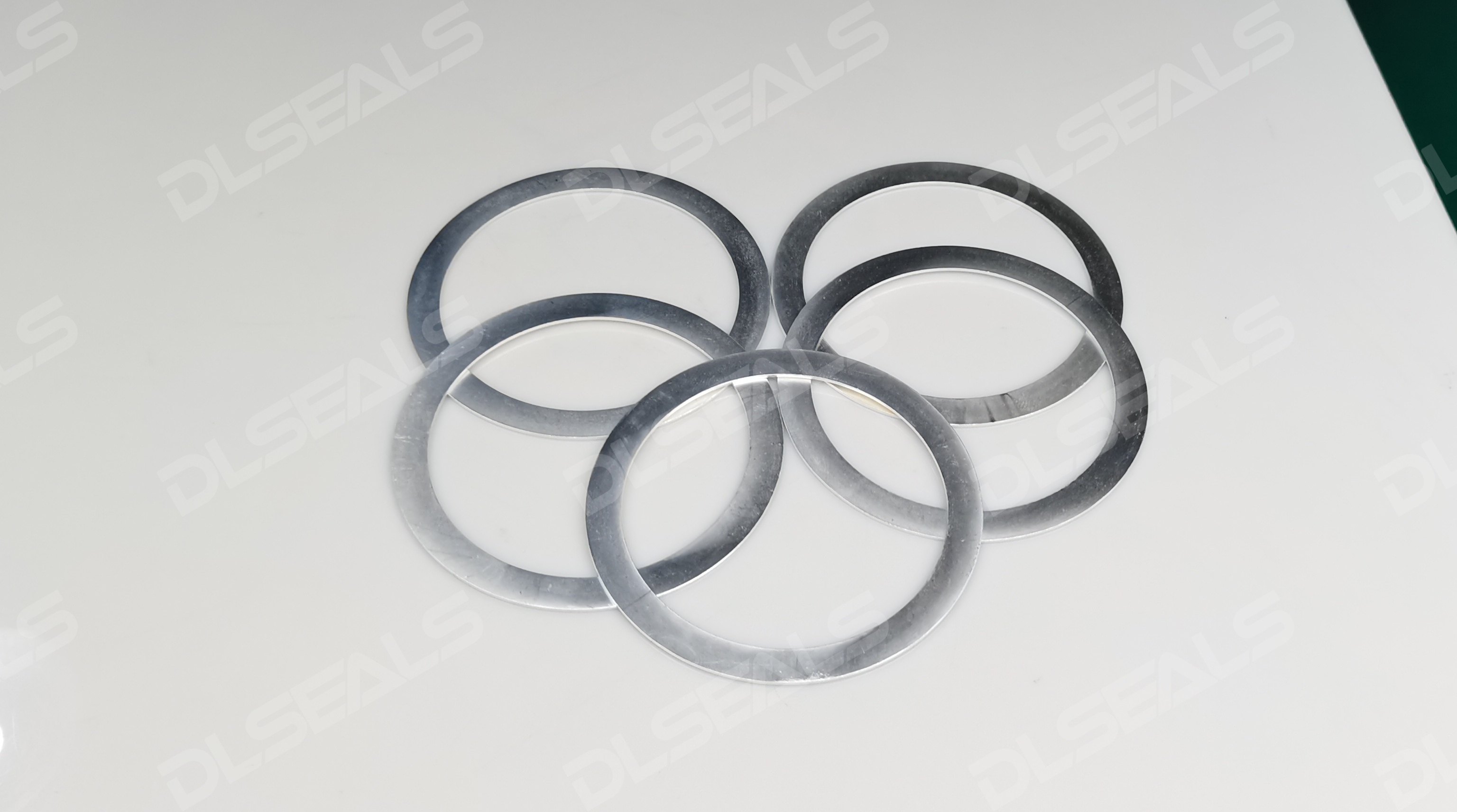
Gaskets are among the most common and fundamental sealing components used in industrial equipment. They are widely applied in pipelines, valves, pumps, pressure vessels, heat exchangers, flanges, and various mechanical systems. Although a gasket is usually a relatively simple component, its material, structure, and operating conditions directly determine the reliability of the entire sealing system.
Different applications require very different gasket properties. Ordinary rubber gaskets may be sufficient for low-pressure water pipelines at room temperature, while high-temperature and high-pressure steam systems may require graphite gaskets, spiral wound gaskets, or metal seals. For strong acids, alkalis, and corrosive chemicals, PTFE and modified PTFE materials often provide better chemical resistance. Under extremely high-temperature, high-pressure, or vacuum conditions, metal gaskets and special high-temperature alloys may be required.
Therefore, gasket selection is essentially the process of matching material properties with actual operating conditions.
A gasket is normally installed between two mating sealing surfaces. Through compression, plastic deformation, or elastic deformation, it fills microscopic irregularities and gaps between the surfaces, preventing leakage of liquids, gases, or other media.
A reliable gasket should generally provide:
Different gasket materials provide different combinations of these properties. As a result, there is no single “universal gasket” suitable for every application.
Rubber gaskets provide excellent elasticity and compression recovery. They can compensate for minor surface irregularities and are relatively easy to install and economical.
Common rubber materials include:
NBR (Nitrile Rubber)
NBR offers good resistance to mineral oils, lubricating oils, and many hydraulic fluids. It is commonly used in mechanical equipment, hydraulic systems, oil circuits, and general industrial piping.
EPDM (Ethylene Propylene Diene Monomer)
EPDM provides excellent resistance to water, steam, weathering, and aging. It is commonly used in hot-water systems, cooling systems, outdoor equipment, and selected chemical applications.
FKM (Fluoroelastomer)
FKM provides good resistance to high temperatures, oils, fuels, and many chemicals. It is widely used in automotive, petroleum, chemical, and industrial applications.
Silicone Rubber
Silicone rubber has excellent resistance to both high and low temperatures and good aging resistance. It is commonly used in food-processing equipment, medical devices, electronics, and applications requiring high cleanliness.
The main advantages of rubber gaskets are excellent elasticity, strong sealing compensation capability, easy installation, and relatively low cost. However, their maximum operating temperature and chemical compatibility are ultimately limited by the properties of the elastomer.
PTFE (polytetrafluoroethylene) has outstanding chemical resistance and is widely used in chemical processing, pharmaceutical, food-processing, and corrosive-fluid applications.
PTFE gaskets offer:
PTFE gaskets are therefore widely used in chemical pipelines, valves, pumps, reactors, flange connections, and corrosive-fluid systems.
However, PTFE has an important limitation: under continuous compressive loads, it can experience creep and cold flow. For high-temperature or high-pressure applications, filled PTFE, modified PTFE, or composite structures can be considered to improve creep resistance and dimensional stability.
Flexible graphite offers excellent high-temperature resistance and good chemical stability. It is commonly used in high-temperature steam systems, petrochemical equipment, and energy-related applications.
The main characteristics of graphite gaskets include:
Graphite can be manufactured into flexible graphite gaskets, packing materials, and metal-reinforced graphite composite gaskets.
However, the compatibility of graphite should be carefully evaluated in strongly oxidizing environments. Temperature alone should not be used to determine whether graphite is suitable.
Spiral wound gaskets are typically manufactured by winding a metal strip together with a flexible filler material in a controlled spiral structure.
Common metal materials include stainless steel, 304, 316L, and various high-temperature alloys. Depending on the application, graphite or PTFE may be used as the filler material.
Spiral wound gaskets combine the mechanical strength of metal with the sealing capability of flexible filler materials. They provide good resistance to high temperatures, high pressures, mechanical loads, and thermal cycling.
Typical applications include:
They are particularly valuable in industrial systems where temperature and pressure fluctuate significantly.
For high-temperature, high-pressure, vacuum, and other extreme operating conditions, solid metal gaskets may be required.
Common materials include:
Metal gaskets generally create a seal through controlled plastic deformation or high localized contact stress. As a result, they often require better surface finish and dimensional accuracy of the mating sealing surfaces.
Their key advantages are high-temperature resistance, high-pressure capability, resistance to aging, and excellent long-term stability.
They are widely used in high-temperature furnaces, pressure vessels, aerospace equipment, semiconductor manufacturing systems, vacuum equipment, and energy systems.
In practical applications, gasket selection should not simply be based on the highest temperature rating or lowest purchase price. The actual operating conditions should be evaluated comprehensively.
Temperature is one of the most important parameters in gasket selection.
Rubber and PTFE materials can generally be considered for low- and moderate-temperature applications, depending on the specific material grade.
For medium- and high-temperature applications, FKM, modified PTFE, graphite, and spiral wound structures may be considered.
At even higher temperatures, flexible graphite, metal gaskets, and nickel-based high-temperature alloys may become more appropriate.
It is important to distinguish between a material's short-term maximum temperature and its long-term continuous operating temperature.
Chemical compatibility directly determines whether a gasket can operate reliably over time.
For example:
The service life of the same material can vary significantly depending on the medium.
Low-pressure systems generally impose fewer demands on gasket mechanical strength, while high-pressure applications require better structural strength and resistance to extrusion or blowout.
High-pressure flange connections should consider:
When high pressure and high temperature occur simultaneously, spiral wound gaskets, metal ring gaskets, and other reinforced gasket structures are generally more suitable than ordinary rubber gaskets.
Gasket performance is determined not only by the material but also by the condition of the mating surfaces.
Different gasket types have different requirements for surface roughness, flatness, and contact pressure.
Flexible gasket materials can compensate for small surface imperfections more effectively, while metal gaskets generally require higher machining accuracy.
Therefore, gasket selection should also take into account the flange design, surface roughness, bolt load, and available installation space.
| Material | Main Advantages | Typical Applications |
|---|---|---|
| NBR | Oil resistance, elasticity, low cost | Hydraulic systems, oil circuits, machinery |
| EPDM | Water, steam, and weather resistance | Water systems, cooling systems |
| FKM | Oil, high-temperature, and chemical resistance | Automotive, petroleum, chemical industries |
| Silicone | Wide temperature range, cleanliness | Food, medical, electronics |
| PTFE | Chemical resistance, low friction | Chemical, pharmaceutical, food industries |
| Flexible Graphite | High-temperature resistance, steam resistance, good recovery | Petrochemical, energy, boilers |
| Spiral Wound Gasket | High-temperature and high-pressure resistance, high strength | Pipelines, pressure vessels, heat exchangers |
| Metal Gasket | Extreme temperature, high pressure, vacuum | Aerospace, semiconductor, energy |
Gaskets are used in almost every industrial field where fluid leakage must be prevented.
Petrochemical Industry
Gaskets are used in pipelines, pumps, valves, pressure vessels, reactors, and heat exchangers. PTFE, graphite, and spiral wound gaskets can be selected according to the specific medium and operating conditions.
Energy Industry
Thermal power, nuclear power, renewable energy, and other energy systems contain large numbers of high-temperature and high-pressure pipelines. These applications require excellent temperature resistance, pressure resistance, and long-term stability.
Chemical Industry
For acids, alkalis, solvents, and other corrosive media, PTFE and modified PTFE materials often provide significant advantages.
Food and Pharmaceutical Industries
Cleanliness, hygiene, and material compatibility are particularly important. Silicone rubber, EPDM, and PTFE are widely used depending on the application and regulatory requirements.
Automotive and Construction Machinery
Gaskets are used in engines, transmissions, hydraulic systems, fuel systems, and various fluid connections. Material selection depends on the fluid, temperature, pressure, and service environment.
Aerospace and Advanced Equipment
Under high-temperature, high-pressure, vacuum, and other extreme conditions, metal gaskets, metal C-rings, E-rings, and high-temperature alloy seals play an important role.
Actual industrial equipment rarely operates under perfectly standardized conditions.
Equipment may simultaneously experience high temperature, high pressure, corrosive media, vacuum, vibration, thermal cycling, and flange deformation. As a result, a standard gasket may not always provide reliable long-term performance.
Customized gaskets can be designed according to the actual equipment requirements, including:
Through customized material and structural design, manufacturers can achieve a better balance between sealing performance, service life, and overall cost.
Although a gasket may appear to be a simple industrial component, its material selection has a direct impact on equipment safety, reliability, and service life.
From conventional rubber gaskets and PTFE to flexible graphite, spiral wound gaskets, and high-temperature alloy metal gaskets, different materials are designed for different temperatures, pressures, media, and operating environments.
Therefore, effective gasket selection is not simply about finding the material with the “highest temperature rating.” It requires comprehensive consideration of temperature, pressure, medium compatibility, sealing surface condition, installation requirements, thermal cycling, and expected service life.
For general industrial equipment, rubber and PTFE can provide economical solutions for many applications. For high-temperature, high-pressure, or corrosive environments, graphite, spiral wound gaskets, and metal sealing structures may offer better performance. For aerospace, semiconductor, energy, and other extreme applications, an integrated approach combining material selection, structural design, and surface treatment is often necessary to achieve reliable long-term sealing.
[DLSEALS kindly Reminder] Sealing issues? Turn to DLSEALS! As a sealing component manufacturer, we specialize in customizing sealing components, providing a full range of services from design, research and development, production, testing, and more. If you have more information you'd like to know, feel free to contact us directly. DLSEALS's product experts are dedicated to serving you!

GUANGDONG DLSEALS TECHNOLOGY CO.,LTD.
TEL/Whatsapp
:+86 15918359971ADDRESS
:No. 2 Niujiaokeng Road, Baizhoubian, Dongcheng District, Dongguan, Guangdong, China.