News
A2026-08-18
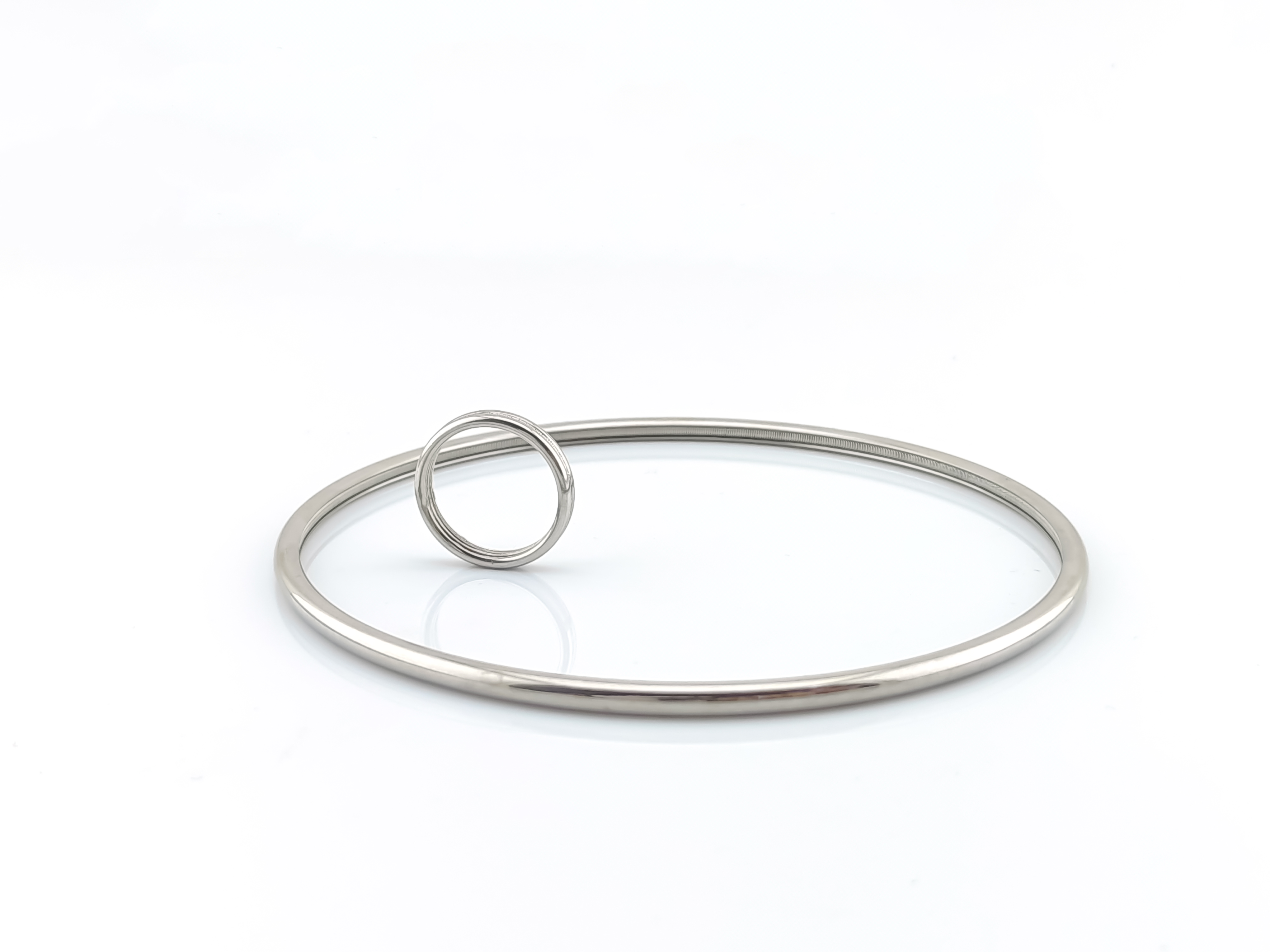
In high-temperature gas reaction systems, methane steam reforming equipment, hydrogen production units, syngas processing systems, and high-temperature testing equipment, sealing components may be exposed to extremely demanding operating conditions. When the medium consists of methane (CH₄), steam (H₂O), hydrogen (H₂), and carbon dioxide (CO₂) at approximately 3 MPa and 700–1100 K (427–827°C), conventional rubber and polymer seals are generally unsuitable for long-term operation.
Under these conditions, seal selection is no longer simply a matter of preventing leakage. The sealing system must simultaneously address high-temperature strength, oxidation and corrosion resistance, hydrogen compatibility, thermal cycling, creep resistance, and long-term sealing stability. For this reason, metal sealing rings are widely considered for demanding high-temperature gas applications.
The most significant characteristic of this application is the combination of high temperature and a multi-component gas environment.
At 700 K, the operating temperature is already approximately 427°C, while 1100 K corresponds to about 827°C. At these temperatures, conventional NBR, EPDM, FKM, silicone rubber, and similar elastomers may experience rapid degradation, hardening, softening, compression set, or thermal decomposition.
PTFE and other polymer-based sealing materials also have practical temperature limitations and generally cannot provide long-term sealing performance at temperatures approaching 1100 K.
The gas mixture itself also creates additional challenges. Methane, steam, hydrogen, and carbon dioxide should not simply be treated as inert gases at elevated temperatures. Depending on temperature, pressure, gas composition, and operating conditions, these gases may participate in surface reactions or change the oxidation state of the metal.
Steam can significantly affect the oxidation behavior of metal surfaces, while hydrogen requires careful consideration of material compatibility. CO₂ and H₂O may also influence the formation and stability of high-temperature oxide layers.
Therefore, the sealing ring must maintain sufficient mechanical strength, sealing load, dimensional stability, and resistance to high-temperature degradation throughout the operating cycle.
The major advantage of metal seals is their ability to operate beyond the temperature range of conventional polymer sealing materials.
Elastomer seals can suffer from thermal aging, hardening, softening, permanent deformation, gas permeation, and decomposition at elevated temperatures. Properly selected metallic materials, however, can maintain structural integrity under significantly higher temperatures.
For a pressure of approximately 3 MPa, pressure itself is not necessarily the most difficult design factor. The greater challenge is the combination of:
High temperature + mixed gases + thermal cycling + long-term sealing requirements.
Metal seals typically achieve sealing through high localized contact stress between the seal and the mating surfaces. Depending on the design, sealing may be achieved through controlled plastic deformation, elastic deformation, or a combination of both.
Common high-temperature metal seal configurations include:
The appropriate configuration depends on the pressure, temperature, thermal expansion, surface finish, assembly load, and expected number of thermal cycles.
Material selection for 700–1100 K service should not be based solely on the maximum temperature rating.
The following properties should be considered together:
316L stainless steel offers good corrosion resistance, manufacturability, and relatively favorable cost.
It can be considered for certain medium- to high-temperature applications, particularly when the maximum temperature is temporary rather than continuous.
However, for continuous service close to 1100 K, 316L is generally not the preferred choice because its mechanical strength and long-term stability decrease significantly as temperature increases.
Nickel-based high-temperature alloys are often more suitable for demanding applications.
Inconel alloys, for example, offer good high-temperature strength, oxidation resistance, and thermal stability. They are commonly considered for high-temperature reactors, reforming systems, furnaces, energy equipment, and other demanding industrial applications.
Depending on the actual environment, candidate materials may include Inconel 600, Inconel 625, Inconel 718, and other nickel-based high-temperature alloys.
The highest-grade alloy is not automatically the best choice. Material selection should be based on the actual continuous operating temperature, gas composition, pressure, thermal cycling, required service life, and cost.
When a C-ring or E-ring relies on elastic recovery to maintain sealing pressure, the high-temperature spring properties of the material become particularly important.
Materials such as Inconel X-750 may be considered for applications requiring good high-temperature elastic performance and resistance to stress relaxation.
This type of material is particularly useful for metal spring seals that must maintain contact pressure during prolonged high-temperature operation.
Selecting a high-temperature alloy alone does not guarantee reliable sealing at 3 MPa and 700–1100 K.
For example, a solid metal O-ring may tolerate high temperatures, but thermal expansion, material softening, flange deformation, and changes in contact stress can still affect sealing performance.
Therefore, the seal geometry should be selected according to the equipment design.
Potential solutions include:
Metal C-rings, metal E-rings, hollow metal O-rings, bellows-type metal seals, and other high-temperature metallic elastic sealing structures.
C-rings use controlled elastic deformation to generate sealing force and can provide effective compensation under high-temperature conditions.
E-rings use multiple sealing lips or contact areas to provide additional sealing reliability and can be suitable for demanding gas sealing applications.
If the equipment experiences significant thermal expansion, flange deformation, or frequent heating and cooling cycles, the elastic compensation capability and stress-retention characteristics of the seal should receive particular attention.
A mixed environment containing methane, steam, hydrogen, and carbon dioxide should not be treated in the same way as a simple high-temperature air environment.
At elevated temperatures, methane may participate in cracking or reforming reactions. Steam can influence the oxidation behavior of metallic surfaces. Hydrogen requires appropriate material compatibility evaluation, while CO₂ may also participate in high-temperature surface reactions.
Therefore, material selection should not be based on the corrosion resistance of a single gas component.
This is particularly important when methane and steam are present together in systems such as steam methane reformers or related hydrogen-production processes.
The actual atmosphere may vary significantly depending on temperature, pressure, steam-to-carbon ratio, gas composition, and reaction conditions.
If the equipment undergoes frequent start-up and shutdown cycles, the seal must also withstand repeated thermal expansion and contraction. In many cases, thermal cycling can be more demanding than steady-state high-temperature operation.
For high-temperature mixed-gas sealing, the surface condition of the metal seal can directly influence initial leakage performance.
Depending on the application, surface treatments may include:
The primary purpose of a soft metallic coating is not to increase the temperature capability of the base metal. Instead, it can help fill microscopic surface irregularities, improve initial sealing, and reduce the assembly load required to achieve effective contact.
However, the temperature capability of the coating must be evaluated independently.
A metal alloy capable of operating at 1100 K does not automatically mean that every coating applied to it can withstand continuous exposure to 1100 K.
Therefore, both the base material and surface coating should be evaluated under the actual operating atmosphere.
A pressure of 3 MPa is not necessarily considered extreme for a properly designed metal seal. However, high temperature significantly changes the sealing conditions.
Several parameters require particular attention.
Contact Pressure
The seal must generate sufficient local contact stress to resist the pressure of the process gas and prevent leakage along the sealing interface.
Compression
Insufficient compression may result in inadequate initial sealing force, while excessive compression can cause excessive plastic deformation and make installation or removal difficult.
Seal Groove Design
Groove depth, width, corner radius, clearances, surface roughness, and alignment all influence sealing performance.
Thermal Expansion
At 700–1100 K, thermal expansion can be significant. Differences in the thermal expansion coefficients of the seal, flange, housing, and other components can cause the sealing contact pressure to change during heating and cooling.
For demanding applications, thermal-mechanical analysis is therefore recommended rather than relying solely on room-temperature dimensions.
For an application with the following conditions:
Medium: CH₄ + H₂O + H₂ + CO₂
Pressure: approximately 3 MPa
Temperature: 700–1100 K
Environment: high-temperature mixed gas
A potential solution is:
Nickel-based high-temperature alloy metal C-ring or E-ring + a high-temperature-compatible metallic coating.
For systems with frequent start-up and shutdown or significant temperature fluctuations, a metallic elastic seal with adequate spring-back capability should be considered.
For continuous operation around 700–900 K, stainless steel and nickel-based alloys can be compared based on gas composition, service life, and cost.
For long-term operation near 1000–1100 K, nickel-based high-temperature alloys should generally receive priority, with additional evaluation of oxidation behavior, corrosion resistance, hydrogen compatibility, and long-term stress relaxation.
For high-temperature gas sealing, “3 MPa and 1100 K” are only basic operating parameters. Long-term sealing reliability depends on the complete operating environment.
Before finalizing the seal design, the following information should be confirmed:
For these extreme operating conditions, metal seal selection is not simply a matter of choosing a standard component. It is a comprehensive engineering process involving material selection, seal geometry, surface treatment, thermal expansion, contact stress, and assembly technology.
For high-temperature mixed gases containing methane, steam, hydrogen, and carbon dioxide at approximately 3 MPa and 700–1100 K, sealing systems face demanding requirements.
Conventional rubber and polymer seals are generally unsuitable for long-term exposure to such temperatures. Metal C-rings, E-rings, hollow metal seals, and other metallic elastic sealing structures can provide significantly better high-temperature stability when properly designed.
For applications operating continuously near 1100 K, particular attention should be given to nickel-based high-temperature alloys, high-temperature elastic metal seal structures, and suitable surface treatments.
The final sealing solution should always be validated under the actual gas composition, pressure, temperature, thermal cycling conditions, and leakage requirements through high-temperature sealing and durability testing.
[DLSEALS kindly Reminder] Sealing issues? Turn to DLSEALS! As a sealing component manufacturer, we specialize in customizing sealing components, providing a full range of services from design, research and development, production, testing, and more. If you have more information you'd like to know, feel free to contact us directly. DLSEALS's product experts are dedicated to serving you!

GUANGDONG DLSEALS TECHNOLOGY CO.,LTD.
TEL/Whatsapp
:+86 15918359971ADDRESS
:No. 2 Niujiaokeng Road, Baizhoubian, Dongcheng District, Dongguan, Guangdong, China.