News
A2026-07-15
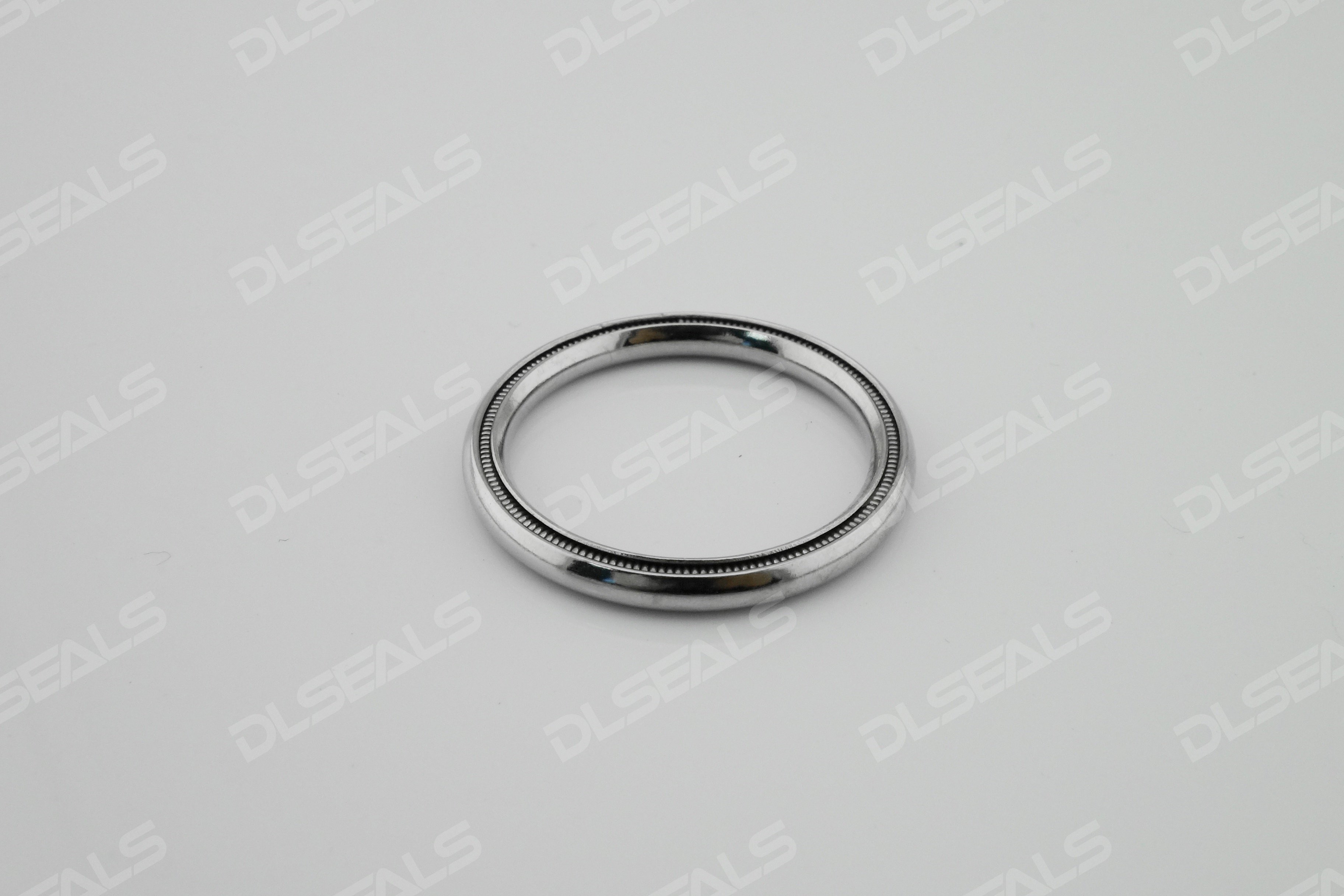
In aerospace engines, nuclear reactors, semiconductor ultra-high vacuum chambers, and high-pressure systems in petrochemical processing, operating conditions frequently exceed 700°C, pressures may reach 1000 MPa, and vacuum levels can be as low as 10⁻⁷ to 10⁻⁹ Pa. Under these extreme conditions, conventional elastomer seals such as PTFE, fluororubber (FKM), and silicone rubber often fall into a "failure zone" due to creep, aging, or permanent deformation.
The Metal C-Ring Seal (Metal C-Ring) was specifically developed to overcome these challenges. With its unique structural design and all-metal construction, it has become one of the key sealing solutions for ensuring the long-term reliability of critical equipment.
Metal C-Ring seals feature a "C"-shaped cross-section, with the opening typically oriented toward the side with higher media pressure. This configuration creates an efficient self-energizing sealing mechanism.
During installation, the C-ring is compressed between two mating sealing surfaces. The elastic deformation generated by compression produces a continuous springback force, which is converted into an initial contact pressure against the sealing surfaces.
This preload compensates for microscopic surface irregularities and establishes the primary seal before system pressurization.
The pressure-assisted sealing effect is the most significant advantage of Metal C-Ring seals.
When high-pressure media enter the cavity inside the C-ring, the internal pressure acts on the inner surface of the ring, forcing the opening to expand outward. As a result, the sealing lips are pressed more firmly against the upper and lower sealing surfaces.
Unlike conventional static seals, the sealing contact pressure increases proportionally with the system pressure, making Metal C-Ring seals particularly suitable for ultra-high-pressure applications.
The pressure transmission path can be summarized as follows:
The outstanding performance of Metal C-Ring seals depends on the combination of high-strength base materials and specialized surface coatings.
The substrate must maintain excellent strength and elastic recovery under elevated temperatures and high-pressure conditions.
Typical materials include:
Since Metal C-Ring seals rely on metal-to-metal contact, dry friction between sealing surfaces is relatively high. Surface treatments are therefore applied to reduce friction, improve sealing performance, and enhance sealing reliability.
During installation, the coating undergoes slight plastic deformation, filling microscopic surface imperfections such as machining marks and scratches.
| Surface Treatment | Temperature Range | Typical Features and Applications |
|---|---|---|
| Silver Plating | -270°C to +650°C | The most widely used high-performance coating. Excellent ductility and cold-flow capability, ideal for cryogenic applications. |
| Copper Plating | -196°C to +400°C | Economical with excellent ductility, commonly used in conventional vacuum systems and pressure vessels. |
| Nickel Plating | -270°C to +750°C | Outstanding corrosion resistance and high-temperature performance, widely used in highly corrosive and oxidizing environments. |
| PTFE Coating | -200°C to +260°C | Suitable for ultra-high vacuum systems and semiconductor manufacturing processes where metal ion contamination must be minimized. |
Among all-metal sealing technologies, Metal C-Rings are often compared with Metal O-Rings.
The primary differences include:
The installation direction of a Metal C-Ring depends on the pressure source.
Metal C-Rings are compression-limited seals, requiring precise groove dimensions or mechanical stop features to control compression during installation.
Typical design requirements include:
Used in fuel injectors, combustor section joints, turbine gas paths, and other high-temperature, high-pressure sealing locations.
Widely used in ALD (Atomic Layer Deposition), CVD (Chemical Vapor Deposition) systems, and ultra-high vacuum chambers where extremely low leakage rates and contamination control are essential.
Applied in reactor pressure vessel components, primary circuit systems, and other critical sealing locations requiring long-term reliability under high temperature, high pressure, and radiation.
Suitable for ultra-high-pressure valves, deep-sea drilling equipment, pressure vessels, compressors, and other systems operating under severe pressure conditions.
Metal C-Ring seals combine an innovative structural design with a pressure self-energizing mechanism, effectively overcoming the performance limitations of conventional elastomer seals in extreme environments.
With their excellent resilience, outstanding pressure resistance, and exceptional durability, they have become the preferred sealing solution for demanding applications involving high temperature, ultra-high pressure, cryogenic conditions, and ultra-high vacuum.
As modern industries continue to push the limits of operating conditions, Metal C-Ring technology will remain one of the most reliable sealing solutions for mission-critical equipment.
DLSEALS specializes in the design and manufacture of high-performance sealing products for demanding industrial applications.
If you would like to learn more about Metal C-Ring Seals or discuss a customized sealing solution, please feel free to contact our engineering team.
[DLSEALS kindly Reminder] Sealing issues? Turn to DLSEALS! As a sealing component manufacturer, we specialize in customizing sealing components, providing a full range of services from design, research and development, production, testing, and more. If you have more information you'd like to know, feel free to contact us directly. DLSEALS's product experts are dedicated to serving you!

GUANGDONG DLSEALS TECHNOLOGY CO.,LTD.
TEL/Whatsapp
:+86 15918359971ADDRESS
:No. 2 Niujiaokeng Road, Baizhoubian, Dongcheng District, Dongguan, Guangdong, China.