News
A2026-01-16
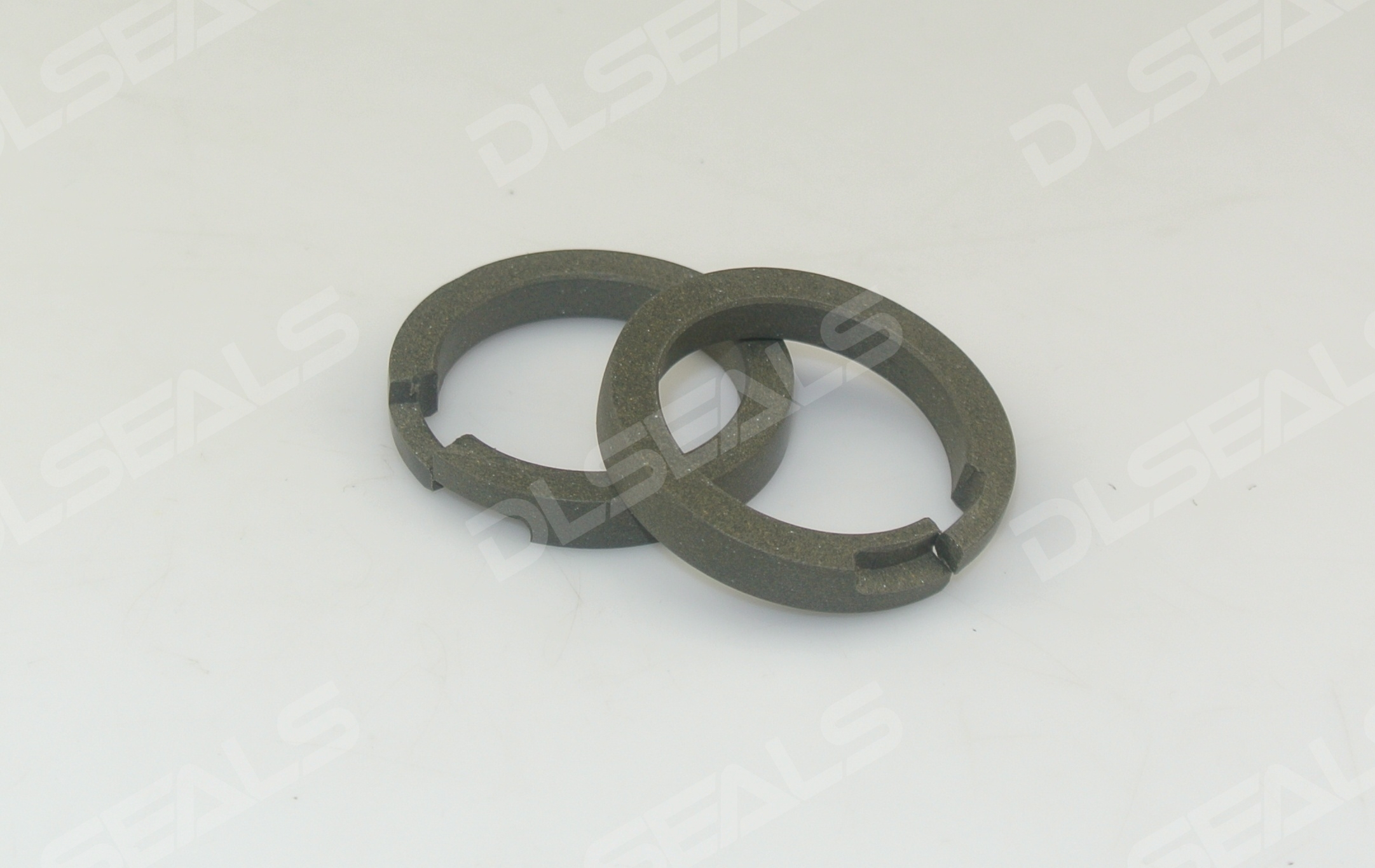
Among high-performance engineering materials, the bronze-based embedded self-lubricating composite material, composed of bronze and polytetrafluoroethylene (PTFE), plays an irreplaceable role in solving severe tribological problems due to its unique design concept and outstanding comprehensive properties. This material is not a simple physical mixture but an ingenious "reinforced concrete"-style structural design that successfully integrates the strength of metal with the lubricity of polymer, breaking through the performance limits of traditional single materials.
I. Core Structure: A Synergistic Design Combining Rigidity and Flexibility
The secret lies in its micro-composite structure. Typically produced using powder metallurgy, a porous bronze matrix with continuous, interconnected pores is first sintered. This matrix provides the material's macro-strength, excellent thermal conductivity, and load-bearing capacity, acting as the "reinforcing steel." Subsequently, molten PTFE is impregnated and fills every pore of the matrix under vacuum and high pressure. The cured PTFE forms a uniformly dispersed solid lubricating phase, becoming the material's "concrete" and "lubricant reservoir."
This structure means its performance advantages are not merely additive but produce a synergistic "1+1>2" effect:
Exceptional Self-Lubrication and Extremely Low Coefficient of Friction
PTFE, known as the "king of plastics," has one of the lowest known coefficients of friction for solids (typically between 0.05 and 0.10). During operation, the PTFE on the material's surface forms a thin, strongly adherent continuous transfer film on the surface of the mating part. This causes friction to occur between the PTFE films, effectively converting sliding friction into low shear within the lubricant itself, achieving near-perfect solid lubrication. Its lubrication performance is unaffected by grease aging, volatilization, or dripping, making it particularly suitable for applications where oil cannot be supplied or where grease would contaminate the product.
Outstanding Wear Resistance and Long Service Life
Traditional plastics or pure PTFE are prone to creep and severe wear under heavy loads. In this composite, the hard bronze matrix bears the vast majority of the load, effectively suppressing PTFE's plastic flow and excessive wear. As the surface PTFE wears away minimally and uniformly, the PTFE stored in the matrix pores continuously replenishes the friction interface, achieving lifetime self-lubrication. This wear is slow and controllable, granting it a service life far exceeding that of ordinary lubricating materials.
High Load Capacity, Fatigue Resistance, and Excellent Thermal Conductivity
The bronze matrix gives the material compressive strength and dynamic load capacity comparable to metal bearings, capable of withstanding high PV values (Pressure × Velocity). The excellent thermal conductivity of the metal phase quickly dissipates frictional heat, preventing PTFE failure or material softening due to heat buildup, ensuring stability under high-speed or intermittent impact loads.
Broad Adaptability and Environmental Friendliness
The material possesses excellent chemical inertness, weather resistance, and a wide operating temperature range (typically from -200°C to +280°C). It is impervious to moisture, vacuum, radiation, and many acidic/alkaline media, solving the problem of lubricant failure in such harsh environments. Moreover, its "oil-free lubrication" characteristic completely eliminates the risk of grease leakage and contamination, offering an unparalleled advantage in clean industries such as food, pharmaceuticals, electronics, and textiles.
II. Key Application Scenarios: Addressing Pain Points of Traditional Lubrication
Thanks to these properties, bronze-PTFE composites are the preferred or only solution in the following areas:
Extreme Environments: Such as flap tracks in aerospace vehicles, spacecraft mechanisms (high vacuum, extreme temperatures); bearings and seals for chemical process pumps (highly corrosive media).
Cleanliness and Non-Contamination Requirements: Bearing bushes and guideways in food filling lines, pharmaceutical equipment, textile machinery (eliminating grease contamination).
Maintenance-Free and Long-Life Design: Slide plates for bridge and large steel structure bearing supports (designed for decades of life, no re-lubrication); hinge seats for hydropower station gates (long-term underwater operation).
High-Precision and Low-Stick-Slip Transmission: Feed mechanisms for precision machine tools, sliding parts of measuring instruments (stable coefficient of friction, no "stick-slip" phenomenon).
Conclusion
Bronze-PTFE self-lubricating composite materials represent a successful philosophy of material design: through structural composition, the functions of load-bearing and lubrication are separated and assigned to the most suitable components. It fundamentally changes the traditional thinking that "lubrication requires oil or grease," providing a reliable, efficient, and clean solution for friction and wear problems under extreme or special operating conditions in modern industry, such as high temperature, low temperature, vacuum, heavy load, contamination sensitivity, and maintenance-free requirements. As manufacturing processes continue to advance (e.g., ternary composites with solid lubricants like molybdenum disulfide or graphite, or using different metal matrices), the performance boundaries of such materials are constantly expanding. Their importance as key basic components in high-end equipment and future industries will become increasingly prominent.
[DLSEALS kindly Reminder] Sealing issues? Turn to DLSEALS! As a sealing component manufacturer, we specialize in customizing sealing components, providing a full range of services from design, research and development, production, testing, and more. If you have more information you'd like to know, feel free to contact us directly. DLSEALS's product experts are dedicated to serving you!

GUANGDONG DLSEALS TECHNOLOGY CO.,LTD.
TEL/Whatsapp
:+86 15918359971ADDRESS
:No. 2 Niujiaokeng Road, Baizhoubian, Dongcheng District, Dongguan, Guangdong, China.